Governments, development finance institutions and international donors have long focused on the number of households connected to electricity grids or supplied through decentralised energy systems. While expanding electricity access remains essential, access alone is no longer an adequate measure of development success.
The more important question is increasingly becoming: what is the electricity actually being used for?
Electricity that powers lights without powering businesses generates social benefits but limited economic transformation. By contrast, electricity that enables hospitals to operate efficiently, factories to manufacture competitively, farms to process crops locally and entrepreneurs to expand productive enterprises creates employment, increases incomes and strengthens national competitiveness.
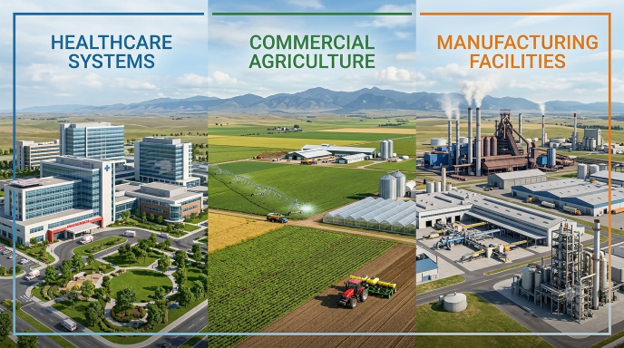
This distinction is giving rise to a new policy framework centred on Health Energy, Productive Energy and Industrial Energy.
Health Energy focuses on ensuring reliable electricity for healthcare systems, including hospitals, diagnostic laboratories, pharmaceutical production, vaccine storage and digital health infrastructure.
Productive Energy supports micro, small and medium-sized enterprises, commercial agriculture, processing facilities, digital businesses and local manufacturing by enabling electricity to generate income and productivity.
Industrial Energy provides reliable, affordable and scalable power for large manufacturing facilities, industrial parks, logistics hubs, mining operations and export-oriented industries that drive structural economic transformation.
Together, these three dimensions represent a shift from viewing electricity as social infrastructure to recognising it as productive economic capital.
For African economies seeking sustained growth, the objective should therefore move beyond electrification towards economic electrification, ensuring that every investment in power infrastructure also strengthens industrial development, employment, healthcare delivery and private sector competitiveness.
Why It Matters
Electricity has become one of the defining constraints on Africa's long-term economic competitiveness.
Despite substantial investment in generation capacity, transmission infrastructure, renewable energy projects and off-grid solutions, many African economies continue to experience persistent power shortages, unreliable supply and limited industrial utilisation.
The consequences extend well beyond inconvenience.
Energy shortages reduce manufacturing output, increase production costs, constrain healthcare services, limit agricultural processing, discourage private investment and weaken export competitiveness.
For decades, electricity policy has primarily been evaluated through access statistics.
Success has often been measured by the number of households connected to national grids or provided with off-grid electricity solutions.
While improving household access remains an important social objective, electricity access alone does not necessarily generate economic transformation.
A village connected to electricity but lacking productive businesses will consume power without significantly expanding incomes or employment.
Conversely, electricity that powers irrigation systems, food processing facilities, manufacturing plants, hospitals and digital enterprises generates broader economic multiplier effects that extend throughout entire communities.
This distinction fundamentally changes how energy investment should be evaluated.
Rather than asking how many people receive electricity, policymakers should increasingly ask:
How many businesses become more productive?
How many factories increase output?
How many farmers add value to agricultural production?
How many healthcare facilities improve patient outcomes?
How many jobs are created because reliable electricity becomes available?
These questions shift energy policy from infrastructure delivery towards economic development.
Beyond Energy Access
Africa has made measurable progress in expanding electricity access over the past two decades.
Grid expansion, mini-grids, solar home systems and renewable energy investment have increased electricity availability across many countries.
Yet significant challenges remain.
Large sections of the continent continue to experience unreliable electricity, frequent outages and high energy costs that reduce business competitiveness.
Even where electricity is available, productive utilisation often remains limited.
Many communities receive sufficient electricity for lighting, charging devices and household consumption but lack the commercial activity necessary to transform access into economic growth.
This represents one of the largest missed development opportunities across the continent.
Electricity should not simply illuminate homes.
It should enable enterprises.
From Social Infrastructure to Economic Infrastructure
Historically, electricity has often been treated primarily as a public service.
Increasingly, governments and development institutions are recognising that electricity should also be understood as productive infrastructure capable of generating economic returns.
Reliable power enables manufacturers to increase production.
It allows healthcare providers to deliver higher-quality services.
It supports cold-chain logistics, agricultural processing, digital businesses, research institutions and modern transport systems.
Every additional productive use of electricity increases national output while strengthening investment attractiveness.
The economic value of electricity therefore extends far beyond energy consumption itself.
Power becomes a catalyst for industrialisation, innovation and competitiveness.
Why the Conversation Is Changing
Several structural developments are reshaping how governments and investors approach energy policy.
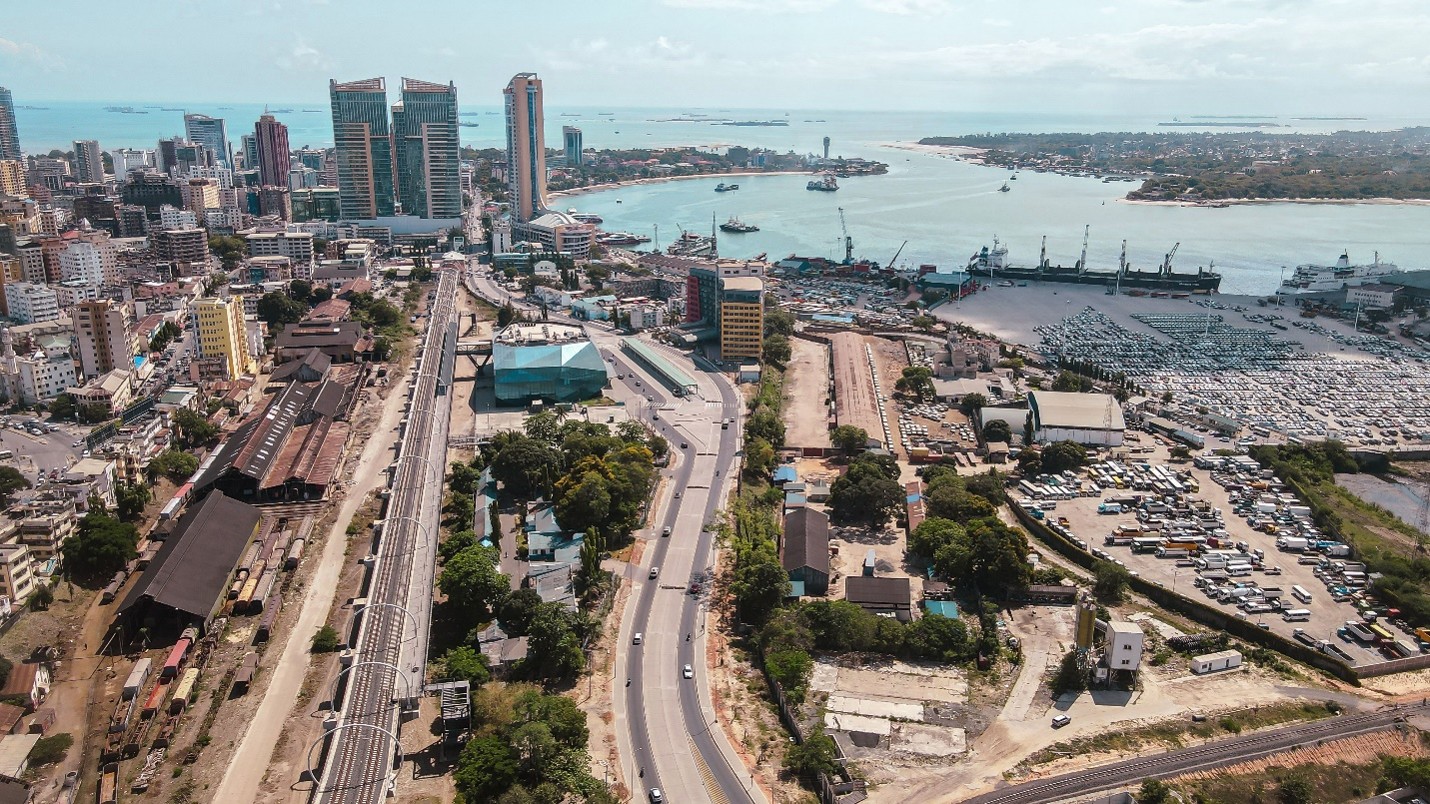
Rapid urbanisation is increasing electricity demand across cities.
Industrialisation strategies under the African Continental Free Trade Area (AfCFTA) require reliable manufacturing power.
Healthcare systems are expanding as populations grow and public health priorities evolve.
Digital economies increasingly depend on data centres, telecommunications infrastructure and technology-enabled businesses that require uninterrupted electricity.
Meanwhile, global investors are placing greater emphasis on productive infrastructure capable of generating measurable economic and social returns.
This convergence is encouraging policymakers to evaluate energy investment not only by megawatts generated but by the economic activity those megawatts enable.
Electricity is increasingly becoming an instrument of industrial policy rather than simply a utility service.
For Africa, this represents a critical strategic shift.
The countries that successfully connect energy investment with productive enterprise, healthcare resilience and industrial expansion will be better positioned to accelerate economic diversification, strengthen private sector growth and improve long-term competitiveness.
Who It Affects
The transition towards Health Energy, Productive Energy and Industrial Energy extends far beyond electricity utilities. It represents a structural shift in how governments, investors, businesses and development institutions should view energy as an engine of economic transformation.
Reliable power is increasingly becoming a competitive advantage. The sectors and institutions that successfully harness it will shape Africa's next phase of industrialisation.
Healthcare Systems
Healthcare is one of the sectors where reliable electricity delivers the highest social and economic returns.
Across Africa, electricity powers virtually every stage of modern healthcare—from emergency care and surgical theatres to diagnostic laboratories, vaccine refrigeration, pharmaceutical manufacturing and digital patient records.
Yet thousands of health facilities continue to operate with intermittent or unreliable electricity, limiting their ability to provide essential services.
Health Energy seeks to address this challenge by ensuring that electricity planning is integrated into healthcare planning.
Reliable power enables hospitals to reduce mortality, improve maternal healthcare, expand laboratory capacity and strengthen disease surveillance systems. It also creates the conditions for local pharmaceutical production, medical research and biotechnology industries to develop.
For governments, investing in Health Energy is therefore not simply an infrastructure decision—it is an investment in national productivity, human capital and economic resilience.
Small Businesses and Entrepreneurs
Micro, small and medium-sized enterprises (MSMEs) account for the overwhelming majority of businesses across Africa and employ a significant share of the continent's workforce.
However, unreliable electricity remains one of the most frequently cited constraints on business growth.
Power interruptions reduce production, increase operating costs and force businesses to depend on expensive diesel generators, reducing profitability and limiting expansion.
Productive Energy aims to ensure that electricity enables businesses to generate income rather than merely consume power.
Reliable electricity allows welders to increase output, grain millers to operate efficiently, cold-storage businesses to preserve food, restaurants to reduce spoilage, digital entrepreneurs to operate uninterrupted and service businesses to improve customer experience.
When electricity becomes productive rather than merely consumptive, local economies generate higher incomes, stronger tax revenues and greater employment.
Agriculture and Agro-Processing
Agriculture remains Africa's largest employer, yet much of the continent's agricultural production continues to leave farms without significant value addition.
Electricity can fundamentally change this equation.
Reliable power enables irrigation, mechanised farming, cold-chain logistics, food preservation, milling, packaging and processing.
Instead of exporting raw commodities, countries can increasingly produce finished food products that generate higher incomes and strengthen food security.
Productive Energy therefore connects agriculture with manufacturing, enabling rural communities to participate in higher-value supply chains while reducing post-harvest losses.
The result is not simply increased agricultural production but stronger rural industrialisation.
Manufacturing and Industry
Industrial Energy sits at the centre of long-term economic transformation.
Manufacturing competitiveness depends upon reliable, affordable and predictable electricity.
Factories producing steel, cement, pharmaceuticals, textiles, chemicals, consumer goods and industrial components cannot compete internationally when production is repeatedly interrupted by power shortages or high energy costs.
Industrial Energy therefore focuses on providing large-scale, stable electricity capable of supporting continuous production.
For export-oriented industries, energy reliability directly influences production efficiency, product quality, delivery schedules and international competitiveness.
Countries that successfully combine industrial policy with energy planning will be better positioned to attract manufacturing investment and integrate into regional and global value chains.
Investors and Development Finance Institutions
Energy investment is increasingly attracting institutional capital.
Development finance institutions, sovereign wealth funds, infrastructure investors and private equity firms are shifting towards projects that demonstrate measurable economic impact rather than simply expanding electricity access.
This evolution reflects growing recognition that productive energy infrastructure generates stronger long-term returns.
Projects linked to industrial parks, healthcare systems, manufacturing clusters, agricultural processing zones and digital infrastructure often produce broader economic multiplier effects than stand-alone electrification programmes.
For investors, the focus is increasingly moving from megawatts installed to productive assets created.
Governments and Policymakers
Governments have perhaps the greatest opportunity to reshape national development through integrated energy policy.
Traditionally, ministries responsible for energy, industry, agriculture, healthcare and finance have often operated independently.
The emerging Health Energy–Productive Energy–Industrial Energy framework requires far greater coordination.
Energy planning should increasingly support national industrial strategies, healthcare development plans, agricultural transformation programmes and investment promotion initiatives.
Rather than planning electricity generation in isolation, governments can prioritise supplying power to industrial corridors, healthcare facilities, export processing zones, logistics hubs and productive rural enterprises.
Doing so maximises both economic and social returns on public investment.
Where the Opportunity Is
Africa's next generation of energy investment is unlikely to be defined solely by expanding electricity access.
Instead, the greatest opportunities will emerge where energy directly enables productive economic activity.
Several sectors already demonstrate particularly strong potential.
Health Infrastructure
Hospitals, regional medical centres, pharmaceutical manufacturing facilities, diagnostic laboratories and vaccine production hubs represent strategic opportunities for integrated energy investment.
Reliable electricity enables advanced medical equipment, digital health technologies, pharmaceutical cold chains and emergency response systems to operate effectively.
As African governments increasingly invest in healthcare resilience, Health Energy will become an essential component of national health security strategies.
The sector also presents significant opportunities for renewable energy developers, battery storage providers and infrastructure investors seeking stable long-term demand.
Agro-Industrial Processing
Agro-processing offers one of the highest economic returns per unit of electricity consumed.
Electricity enables processing facilities to convert agricultural products into higher-value goods, extending shelf life, reducing waste and increasing export potential.
Processing cocoa into chocolate, milk into dairy products, cassava into industrial starch, or fruits into packaged juices generates substantially more economic value than exporting raw agricultural commodities.
Energy investment that supports agro-industrial zones therefore contributes simultaneously to food security, manufacturing, export diversification and rural employment.
Industrial Parks and Manufacturing Clusters
Across Africa, governments are investing in industrial parks, special economic zones and manufacturing clusters designed to attract domestic and international investment.
These developments depend fundamentally on reliable Industrial Energy.
Manufacturers require uninterrupted electricity to justify large-scale investment in machinery, automation and production facilities.
Industrial parks supplied with reliable power are significantly more attractive to investors than locations where electricity remains uncertain.
Energy infrastructure therefore becomes one of the strongest determinants of industrial competitiveness.
Digital Infrastructure
Africa's expanding digital economy is creating new forms of electricity demand.
Data centres, telecommunications networks, financial technology companies, cloud computing providers and artificial intelligence infrastructure all require reliable power.
Digital businesses increasingly represent productive energy users capable of generating high-value employment while supporting wider economic modernisation.
Countries investing simultaneously in renewable energy and digital infrastructure may therefore establish new competitive advantages within Africa's emerging knowledge economy.
Clean Energy Manufacturing
The global energy transition presents an additional opportunity.
Rather than remaining solely exporters of critical minerals, African economies can increasingly participate in manufacturing components for renewable energy systems, batteries, electric mobility and energy storage technologies.
Industrial Energy can support domestic production of solar equipment, electrical components and clean-energy technologies while strengthening regional manufacturing ecosystems.
The opportunity extends beyond energy generation to the creation of entirely new industrial value chains.
Emerging Market Signals
Several structural developments indicate that productive energy is becoming central to Africa's economic future:
Governments are increasingly linking energy investments with industrial development strategies.
Development finance institutions are prioritising projects that demonstrate measurable economic impact alongside electricity access.
Industrial parks and special economic zones are expanding across multiple African economies.
Healthcare infrastructure investment is accelerating, increasing demand for reliable medical power systems.
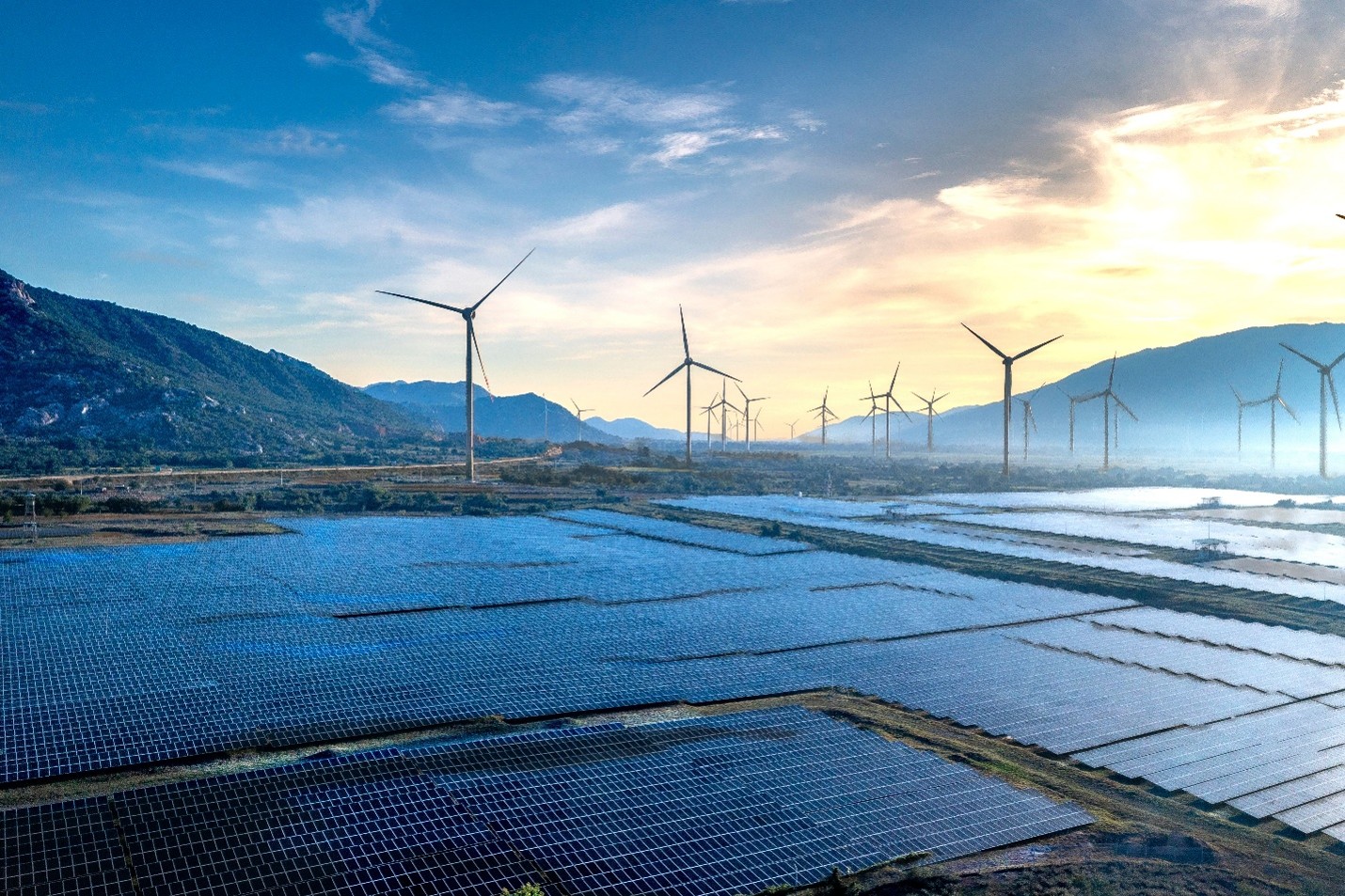
Renewable energy combined with battery storage is making productive electricity more accessible to businesses in underserved areas.
Private investors are placing greater emphasis on commercially viable energy infrastructure that supports manufacturing, agriculture and digital industries.
Taken together, these trends suggest that Africa's energy future will be shaped not simply by how much electricity is generated, but by how effectively that electricity powers economic transformation.
Strategic Risks
The shift towards Health Energy, Productive Energy and Industrial Energy presents one of Africa's most significant economic opportunities. Yet achieving this transition will require overcoming structural barriers that have historically constrained both energy systems and industrial development.
The challenge is no longer simply generating additional electricity. It is ensuring that power infrastructure supports productive sectors capable of creating jobs, attracting investment and strengthening long-term economic resilience.
The Access–Productivity Gap
Across much of Africa, energy policy has traditionally prioritised expanding electricity access. While this has delivered important social gains, access alone has not consistently translated into economic growth.
Many newly electrified communities continue to experience limited commercial activity because electricity arrives before productive enterprises, industrial investment or market infrastructure.
The result is an access–productivity gap.
Households receive electricity, yet businesses remain underdeveloped, manufacturing capacity remains limited and local economies generate insufficient demand to sustain large-scale energy investment.
Closing this gap requires governments to synchronise electrification with enterprise development, industrial planning and local economic growth.
Electricity should arrive alongside opportunity.
Infrastructure Without Industrial Strategy
Power infrastructure generates its greatest returns when integrated into broader economic development strategies.
Too often, energy projects are planned independently from industrial parks, agricultural corridors, healthcare systems and export zones.
This fragmented approach limits the broader economic impact of public investment.
Future infrastructure planning should increasingly coordinate electricity generation, transmission and distribution with manufacturing clusters, logistics hubs, healthcare facilities, commercial agriculture and digital infrastructure.
Integrated planning creates stronger multiplier effects while improving the commercial viability of energy investments.
Affordability and Industrial Competitiveness
Reliable electricity alone is insufficient if businesses cannot afford to use it.
Across several African markets, industrial electricity tariffs remain significantly higher than those faced by competitors in Asia, the Middle East and parts of Latin America.
High energy costs reduce export competitiveness, discourage manufacturing investment and increase production expenses across entire value chains.
Balancing cost recovery with industrial competitiveness therefore becomes a central policy challenge.
Governments, regulators and utilities must increasingly explore tariff structures that encourage productive electricity use while maintaining financial sustainability.
Financing Constraints
Energy infrastructure requires substantial long-term capital.
Generation projects, transmission networks, battery storage systems, industrial substations and renewable energy facilities often involve investment horizons extending over decades.
Many domestic financial systems remain insufficiently equipped to provide this scale of patient capital.
Expanding participation from pension funds, sovereign wealth funds, infrastructure investors and development finance institutions will therefore be essential.
Innovative financing mechanisms—including blended finance, green bonds, infrastructure funds and public-private partnerships—will become increasingly important in scaling productive energy investment.
Institutional Coordination
Perhaps the greatest challenge is institutional rather than technical.
Energy ministries cannot deliver productive energy alone.
Industrial policy, healthcare planning, agricultural development, investment promotion, transport infrastructure and financial regulation must increasingly operate within a coordinated national strategy.
Countries that successfully align these institutions will likely capture significantly greater economic value from every megawatt generated.
Financing the Next Generation of Energy Infrastructure
The future of Africa's energy transition will depend not only on engineering but also on finance.
Capital allocation must increasingly prioritise projects capable of generating measurable economic outcomes alongside expanded electricity supply.
Development Finance Institutions
Institutions such as the African Development Bank, African Export-Import Bank, International Finance Corporation and regional development banks continue to play a catalytic role in financing Africa's energy transition.
Increasingly, these institutions are supporting integrated projects combining renewable energy, industrial infrastructure, healthcare resilience and private sector development.
Future investment is expected to place greater emphasis on productive economic outcomes rather than electricity generation alone.
Private Infrastructure Capital
Institutional investors are showing growing interest in infrastructure capable of delivering stable long-term returns.
Industrial power systems, renewable energy plants, transmission infrastructure, battery storage facilities and distributed energy solutions are becoming increasingly attractive investment opportunities.
Projects linked to productive industries generally present stronger commercial fundamentals than projects serving consumption alone because industrial users often generate more predictable electricity demand.
Commercial Banks and Local Capital Markets
Domestic financial institutions also have an important role to play.
Long-term industrial lending, local-currency infrastructure finance and manufacturing credit facilities can strengthen productive electricity demand while reducing dependence on foreign borrowing.
Developing deeper domestic capital markets will allow countries to finance larger infrastructure programmes while improving resilience against exchange-rate volatility.
Public–Private Partnerships
Public-private partnerships remain one of the most effective mechanisms for accelerating productive energy investment.
Governments provide policy certainty, regulatory frameworks and enabling infrastructure, while private investors contribute capital, technical expertise and operational efficiency.
Successful partnerships increasingly focus on integrated industrial ecosystems rather than isolated infrastructure projects.
Energy becomes one component of broader economic transformation.
What Decision-Makers Should Do Next
For Governments
National energy strategies should evolve from access-focused programmes towards productivity-focused development.
Future investments should prioritise electricity supply for hospitals, industrial parks, agricultural processing centres, logistics corridors and digital infrastructure alongside household electrification.
Governments should also strengthen coordination between ministries responsible for energy, finance, industry, agriculture and health to ensure that electricity investment directly supports national development priorities.
For Investors
Investors should evaluate energy projects according to the economic ecosystems they enable.
Projects serving industrial manufacturing, healthcare infrastructure, commercial agriculture and digital industries often generate stronger long-term value than investments focused solely on residential demand.
Infrastructure portfolios should therefore integrate energy with industrial growth strategies rather than treating electricity generation as a standalone asset class.
For Business Leaders
Private sector leaders should view reliable electricity as a strategic investment rather than simply an operational cost.
Manufacturers, healthcare providers, logistics companies, agribusinesses and technology firms should incorporate energy resilience into long-term expansion plans through renewable energy integration, energy efficiency and modern production systems.
Businesses capable of securing dependable electricity will strengthen productivity while reducing operational risk.
For Development Partners
Development institutions should increasingly support programmes that connect energy investment with measurable economic outcomes.
Future initiatives should integrate renewable energy deployment with enterprise development, industrialisation, healthcare resilience, workforce training and regional trade infrastructure.
The objective should be to maximise the developmental return on every energy investment.
Executive Outlook
Africa's energy conversation is entering a new phase.
For decades, success was measured by the number of households connected to electricity. While universal access remains an essential development goal, the next generation of policy must focus on what electricity enables.
Health Energy, Productive Energy and Industrial Energy provide a more comprehensive framework for evaluating the true economic value of power infrastructure.
Electricity should strengthen healthcare systems capable of protecting human capital.
It should empower businesses that create employment, increase productivity and expand local enterprise.
It should support factories that manufacture globally competitive products, process agricultural resources domestically and integrate African economies into regional and international value chains.
In other words, power should be viewed not merely as infrastructure but as productive capital.
Countries that successfully align energy investment with industrial policy, healthcare development, enterprise growth and digital transformation will be better positioned to accelerate structural economic change.
The strategic question is therefore no longer how many megawatts Africa can generate.
It is how effectively those megawatts contribute to stronger industries, healthier populations, more competitive businesses and higher-value economies.
For executives, investors and policymakers, the opportunity is clear.
The future belongs not simply to nations that produce more electricity, but to those that convert electricity into sustained economic value.
Sources & Methodology
This analysis draws upon research and policy publications from the African Development Bank (AfDB), African Export-Import Bank (Afreximbank), International Energy Agency (IEA), World Bank Group, International Finance Corporation (IFC), United Nations Industrial Development Organization (UNIDO), Sustainable Energy for All (SEforALL), International Renewable Energy Agency (IRENA), the African Union Commission and the African Continental Free Trade Area (AfCFTA) Secretariat. Market developments and infrastructure trends were cross-referenced with reporting from Reuters, the Financial Times and official publications from multilateral institutions where appropriate.
The article follows Aldrenor's Premium Intelligence methodology, combining institutional research, infrastructure analysis, economic policy and long-term structural trends to provide strategic insight for executives, investors and policymakers. It is intended for informational purposes and should not be interpreted as investment, financial or legal advice.