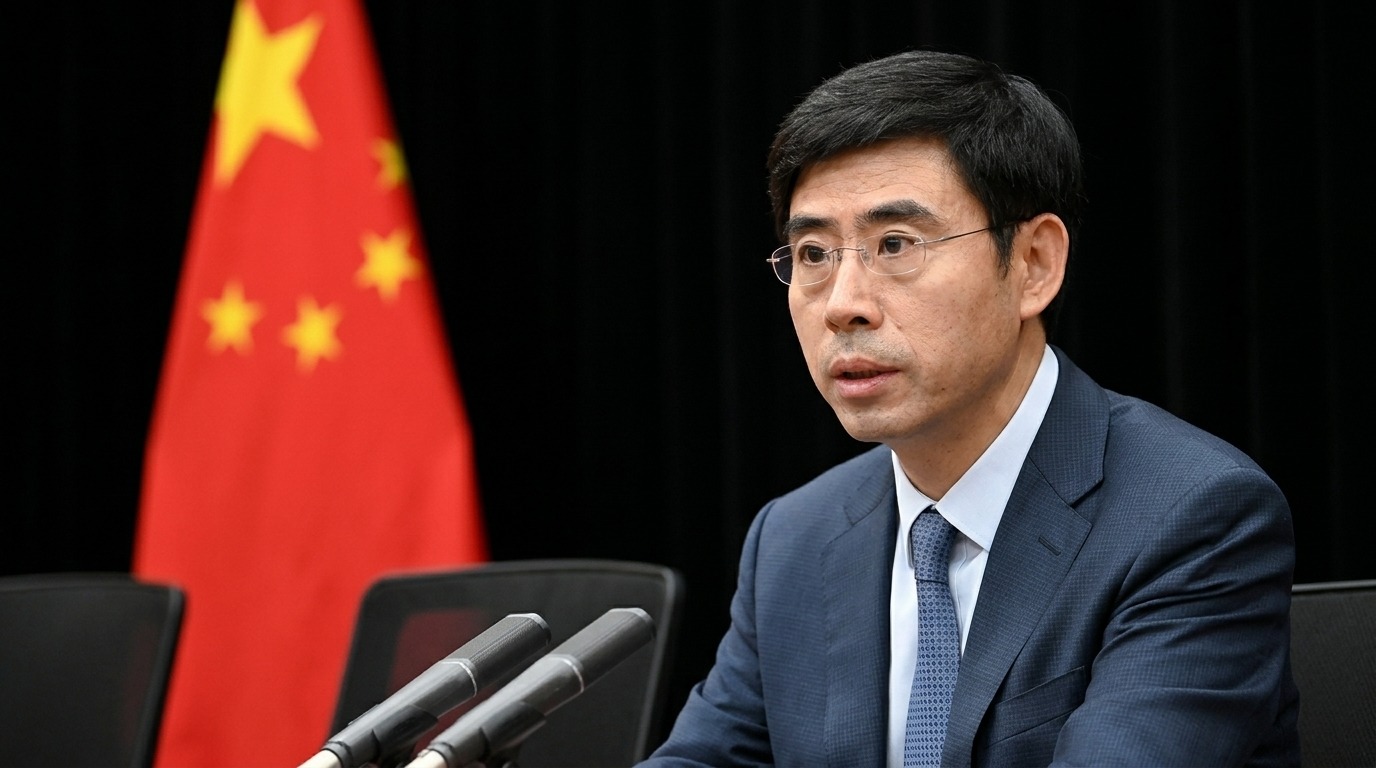
Chinese Commerce Ministry spokesperson He Yadong said on Thursday that Beijing would closely monitor developments and take necessary action to protect its legitimate economic and commercial interests.
The statement followed the introduction of proposed US levies affecting several trading partners, including China, the European Union and Japan. The new tariffs could reach 20%, adding another layer of uncertainty to international trade negotiations.
He criticised Washington's justification for the measures, arguing that concerns over industrial overcapacity were being used as a pretext for protectionist policies.
According to the Chinese Commerce Ministry, the tariffs risk disrupting international supply chains, increasing costs for businesses and consumers, and creating additional pressure on global economic growth.
The latest dispute comes against the background of an extended trade confrontation between the world's two largest economies. US President Donald Trump has repeatedly criticised China's trade surplus and argued that Chinese imports have contributed to pressure on American manufacturing industries and employment.
The two countries previously reached a trade ceasefire in October 2025, following an escalation that saw tariffs on Chinese goods reach as high as 145% at one stage. The agreement is due to expire in January, although an extension was secured in September.
Trump and Chinese President Xi Jinping also met at an Asia-Pacific Economic Cooperation summit in Shenzhen last week, with another meeting expected at the December G20 summit in the United States.
The latest tariff proposals therefore introduce additional uncertainty into an already sensitive diplomatic and commercial relationship.
For international businesses, renewed trade restrictions could affect sourcing decisions, manufacturing costs and investment planning. Companies operating across Asian and Western markets may also face increased pressure to diversify supply chains and reassess exposure to changing trade regulations.
The implications extend beyond China and the United States, given the involvement of other major trading partners and the interconnected nature of global manufacturing.
Attention will now turn to Beijing's response and whether diplomatic engagement can prevent the latest tariff dispute from developing into another prolonged trade confrontation.