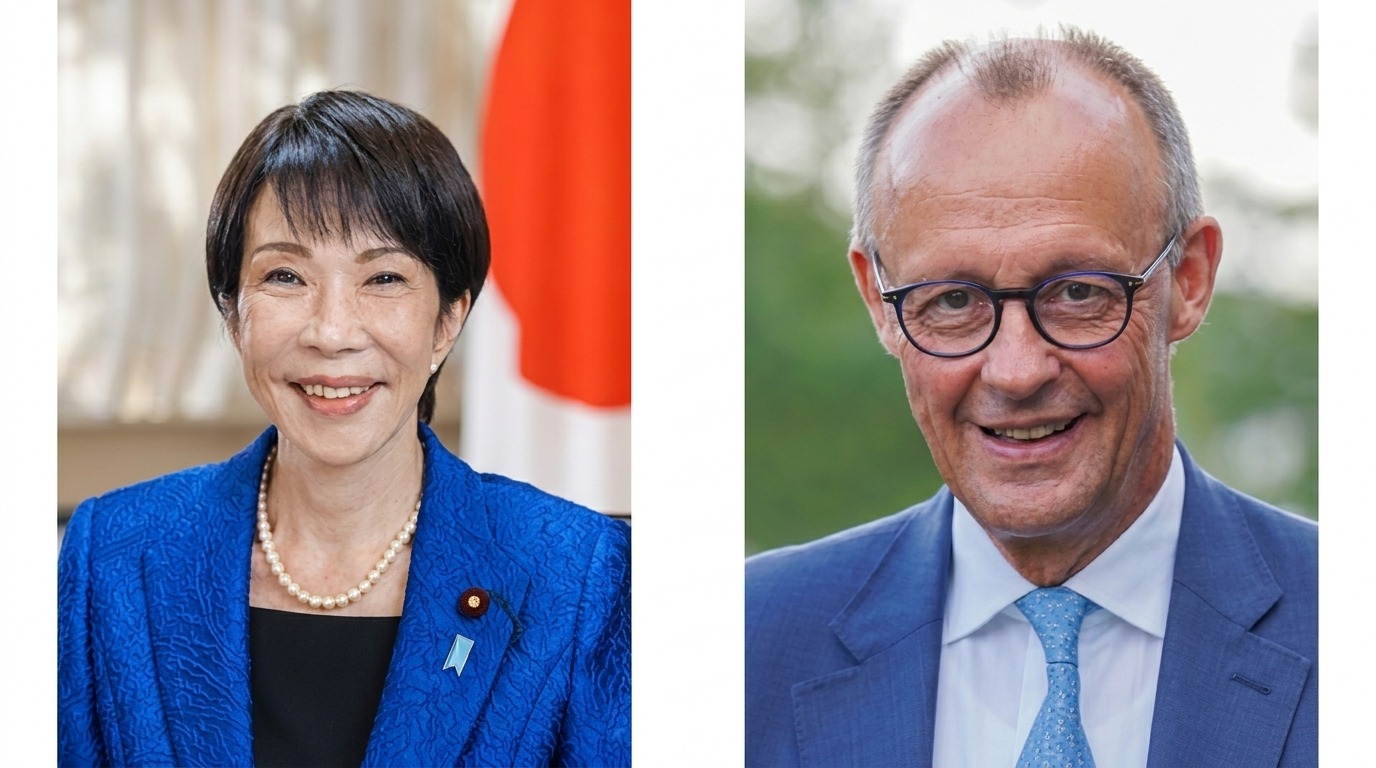
German Chancellor Friedrich Merz met Japanese Prime Minister Sanae Takaichi on 28 October during his first visit to Japan since taking office. The leaders adopted joint declarations on economic security and cooperation in advanced technologies, including artificial intelligence, according to Japanese reporting. They also discussed China’s growing regional influence and Russia’s invasion of Ukraine, while agreeing to expand economic and defence cooperation.
The talks reflect a wider effort by advanced economies to make supply chains more resilient in sectors where reliance on a limited number of suppliers can create strategic vulnerabilities. Semiconductor production, AI, critical technologies and industrial inputs have become central to economic policy as governments confront export controls, tariffs and the risk that trade dependencies may be used for political leverage.
Merz also urged Japan to support a proposed alliance of like-minded countries aimed at defending rules-based trade. In remarks prepared for a business summit in Tokyo, he said countries could coordinate their responses if the global trading system were violated or economic coercion used. The proposal is designed to give middle powers greater collective leverage when dealing with larger economies, including the United States and China, although its precise structure and membership remain to be established.
The visit has a commercial dimension as well. Merz travelled with a delegation of business leaders, and Japanese and German organisations were expected to pursue agreements in areas including AI and other advanced technologies. Germany has framed its wider Asia trip as an opportunity to deepen economic and security cooperation with close partners.
Closer coordination will not remove the countries’ economic constraints. Germany remains deeply connected to global manufacturing and Asian markets, while Japan relies on international supply chains for energy, materials and technology. Diversification can improve resilience but may raise costs, require new investment and take years to implement. Both governments must also balance strategic concerns with the commercial interests of firms that depend on trade with China and other major markets.
The next test will be whether the declarations and diplomatic proposals produce practical projects, clearer supply-chain arrangements and sustained cooperation between businesses and governments. The Tokyo meeting signals shared concern over economic coercion and technology security, but its significance will depend on implementation rather than announcements alone.