
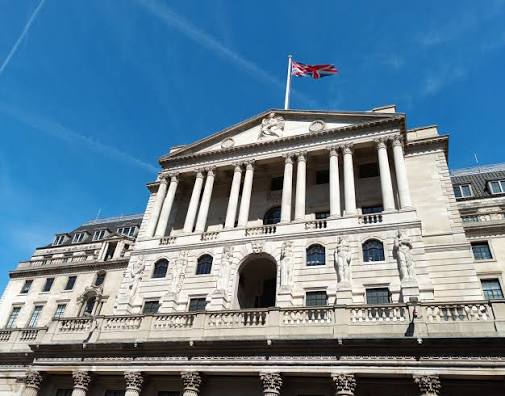
The central bank is widely expected to leave its benchmark Bank Rate unchanged at 3.75% on Thursday. Attention is therefore likely to centre on the tone of the Monetary Policy Committee and its assessment of inflation risks rather than the immediate rate decision.
UK inflation accelerated to 3.1% in August, while energy prices have risen sharply amid disruptions linked to the conflict in the Middle East. British natural gas and Brent crude prices have increased by almost 20% since the beginning of September, increasing the potential for higher household and business costs.
The increase in energy costs presents a particular challenge for the UK economy because higher fuel and gas prices can feed into transportation, manufacturing and household expenditure.
Markets have already adjusted their expectations for future monetary policy. Money markets have indicated a significant possibility of a quarter-point rate increase in November, although economists surveyed by Reuters have been considerably less convinced that such a move will take place.
The divergence reflects uncertainty over whether the recent increase in energy prices will translate into sustained domestic inflation or remain primarily a temporary external shock.
The Bank must also consider broader economic conditions. Higher interest rates can constrain household borrowing, corporate investment and property activity, while keeping rates elevated for longer can increase financing costs across the economy.
At the same time, easing monetary conditions too quickly could risk allowing energy-driven price increases to become embedded in inflation expectations.
The challenge is further complicated by developments in global financial markets. The Federal Reserve raised US interest rates by 25 basis points on Wednesday, while the European Central Bank has also moved towards tighter policy as energy costs increase.
For businesses, the Bank's communication may be as important as the rate decision itself. Companies are assessing borrowing costs, wage pressures and consumer demand while attempting to plan investment through an uncertain inflation environment.
The central bank's latest assessment will therefore provide an important signal for sterling, UK government bonds and corporate financing conditions.
As energy markets remain volatile, the Bank of England faces the difficult task of maintaining price stability while avoiding unnecessary pressure on an economy already exposed to higher operating and borrowing costs.