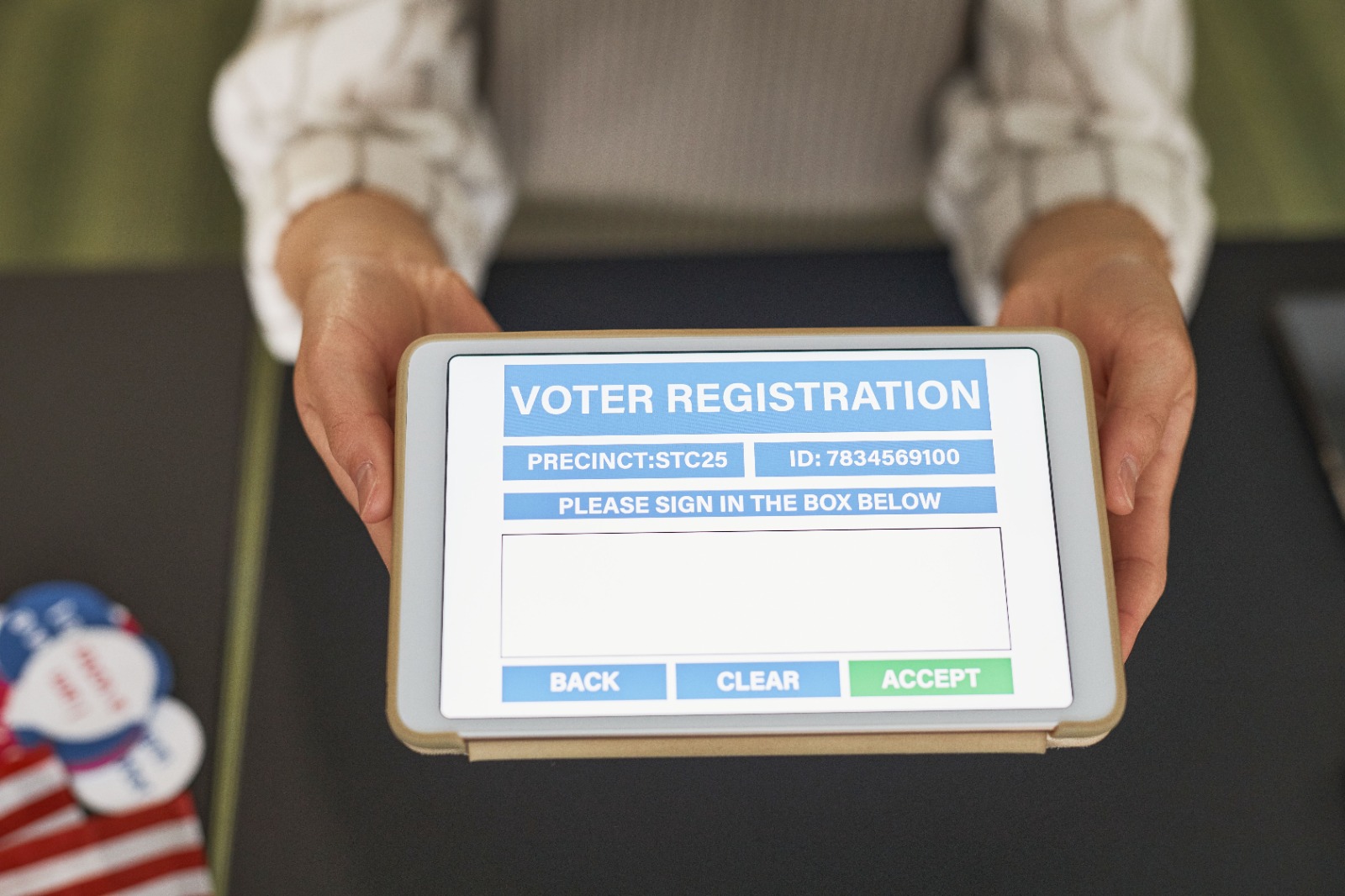
The administration is challenging a lower-court ruling that blocked the use of a revised Systematic Alien Verification for Entitlements, or SAVE, database to check state voter rolls. Washington argues that the system would give states an additional mechanism for verifying citizenship and protecting election integrity.
Opponents argue that the database is insufficiently reliable and could wrongly identify naturalised citizens as non-citizens. Civil-rights groups have warned that errors in voter databases can have consequences beyond administrative inconvenience, potentially forcing eligible voters to correct their status or risking their removal from electoral rolls.
The dispute comes at a politically sensitive moment. The 2026 midterms will determine control of Congress and provide an early measure of the political strength of President Donald Trump’s second-term agenda.
The administration’s position reflects a broader effort to increase federal involvement in election administration, traditionally an area in which US states exercise substantial authority. Supporters say stronger verification is necessary to protect public confidence in elections. Critics counter that election integrity measures must be designed so that preventing ineligible voting does not inadvertently restrict eligible participation.
The Supreme Court’s involvement therefore extends beyond the technical question of whether a particular database can be used. The case could influence the balance between federal and state authority over election administration and establish new parameters for how citizenship information can be applied to voter registration.
The legal challenge is also part of a wider immigration-policy architecture. The SAVE database was originally designed for eligibility verification in federal programmes, but the administration is seeking to expand its practical role in election administration.
With the midterms approaching, the timing raises the political stakes. Any Supreme Court decision could affect both the administration of voter rolls and the national debate over election legitimacy.
The central question for the court will be whether stronger federal verification can be reconciled with the constitutional and statutory protections owed to eligible voters.
For Aldrenor, the significance extends beyond the 2026 election cycle: the case could help define how technology, immigration records and federal power intersect with democratic participation in the United States.