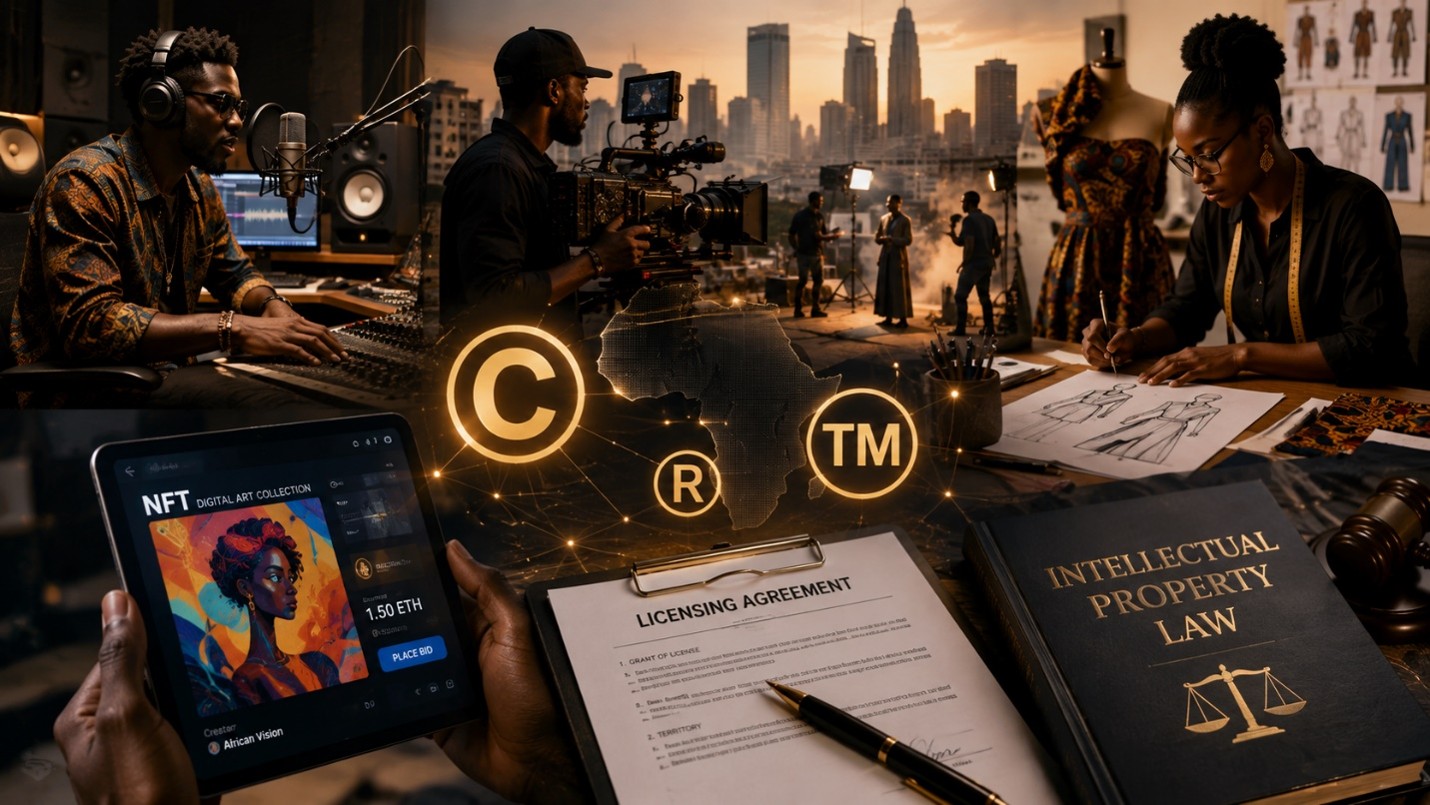
Yet the central strategic question is no longer whether African content can reach global audiences. It is who controls the infrastructure through which that content is discovered, monetised and distributed.
Today's cultural economy is increasingly governed by digital platforms rather than traditional broadcasters or physical distributors. Global companies such as Netflix, Spotify, YouTube and Amazon Prime Video, alongside regional players including Showmax and Boomplay, increasingly determine which content is recommended, licensed, promoted and monetised. Their algorithms, licensing models and commercial terms have become critical gatekeepers for African creators and rights holders.
This represents both a significant opportunity and a strategic vulnerability. Streaming has lowered barriers to international distribution, enabling African creators to reach audiences that were previously inaccessible. At the same time, ownership of distribution infrastructure, recommendation algorithms, consumer data and subscription revenues remains concentrated among a relatively small number of global technology and media companies.
For policymakers, investors and creative businesses, the strategic issue is therefore evolving from content production to platform power. The next phase of Africa's creative economy will be shaped not only by who creates culture, but by who owns the systems through which culture is financed, distributed and monetised.
Strategic Thesis
For decades, Africa's creative industries were constrained primarily by limited production capacity and fragmented distribution networks. Today, those barriers are gradually being replaced by digital ecosystems that allow creators to publish globally at unprecedented speed.
However, distribution has not become decentralized, it has become platform-based.
Streaming platforms increasingly control:
Audience discovery through recommendation algorithms.
Revenue allocation through licensing and royalty models.
Consumer data and behavioural insights.
Advertising and subscription relationships.
International market access.
Consequently, competitive advantage is shifting from content ownership alone towards control of digital distribution ecosystems.
This mirrors broader trends across the global digital economy, where platforms increasingly capture a disproportionate share of value by controlling market access rather than producing the underlying products themselves.
Why This Matters
Africa's creative industries are no longer peripheral to economic development. The Aldrenor content blueprint identifies the Creative Economy & Cultural Industries as a priority editorial vertical because it sits at the intersection of culture, technology, investment and international competitiveness. It is intended to serve entertainment executives, investors, advertisers and policymakers through intelligence-led analysis rather than entertainment reporting.
The market itself continues to expand.
According to IFPI's Global Music Report 2026, recorded music revenues in Sub-Saharan Africa grew 15.2% in 2025, making it one of the fastest-growing music regions globally. South Africa remained the region's largest recorded music market, accounting for more than three-quarters of regional revenues. Streaming continues to be the primary driver of industry growth.
Video streaming is also becoming increasingly competitive. Research tracking Africa's streaming landscape identifies more than 560 streaming services operating across the continent by 2025, although global platforms continue to dominate audience reach while regional services such as Showmax strengthen their position through investment in African content and local partnerships.
For African governments, this creates a strategic policy question extending beyond entertainment: how much of the economic value generated by African culture remains within African markets?
Who Controls Distribution?
The economics of Africa's creative industries are increasingly shaped by control over distribution rather than production. While artists, filmmakers and creators generate intellectual property, the commercial value of that content is often determined by the platforms, networks and intermediaries that decide how audiences discover, consume and pay for it.
Unlike the analogue era; when cinemas, broadcasters, radio stations and physical retailers dominated cultural distribution, the digital economy operates through interconnected ecosystems of streaming platforms, telecommunications providers, payment systems, recommendation algorithms and rights management organisations.
Understanding where power sits within this ecosystem is essential for executives, investors and policymakers assessing the future of Africa's creative economy.
Global Streaming Platforms: The New Digital Gatekeepers
Global streaming services remain the most influential distributors of African creative content.
Netflix, YouTube, Spotify, Apple Music and Amazon Prime Video have transformed international access to African music, films and television by providing creators with immediate access to audiences across multiple markets.
However, these platforms are not neutral marketplaces.
They determine:
Which content receives algorithmic promotion.
How recommendation engines prioritise new releases.
Licensing and revenue-sharing arrangements.
Audience analytics available to creators.
Advertising inventory and subscription pricing.
Platform policies governing content visibility.
As a result, they increasingly influence commercial success as much as creative quality.
For African creators, international visibility has expanded considerably, but commercial dependence on foreign-owned distribution infrastructure has also increased.
YouTube: Africa's Largest Cultural Marketplace
Among digital platforms, YouTube occupies a distinctive position.
Unlike subscription-only streaming services, YouTube combines advertising revenue, music distribution, live streaming, podcasts, educational content and creator monetisation within a single ecosystem.
Its accessibility makes it one of the continent's most widely used platforms for creators and audiences alike.
According to YouTube, the platform paid more than US$70 billion to creators, artists and media companies globally during the three years preceding February 2024, illustrating the scale of the creator economy built around its distribution infrastructure. While YouTube does not publish Africa-specific payout figures, the platform has become a critical revenue channel for many African musicians, filmmakers and digital creators.
The strategic implication is clear.
Many African creators increasingly own their content but not the digital marketplace through which audiences discover it.
Spotify and the Globalisation of African Music
African music has become one of streaming's fastest-growing cultural exports.
Genres including Afrobeats, Amapiano and Bongo Flava now generate substantial international listening across Europe, North America and Latin America.
Spotify reports continued year-on-year growth in global consumption of African music, with Nigerian and South African artists among the platform's fastest-growing international performers. The company has also expanded investment in African editorial playlists, artist development initiatives and market-specific programmes designed to increase discoverability.
Yet streaming economics remain uneven.
Revenue is distributed according to complex licensing agreements involving record labels, music publishers, distributors and collective management organisations. For many independent artists, the share ultimately received from streaming income can vary considerably depending on contractual arrangements.
Consequently, ownership of music rights increasingly matters as much as audience size.
Showmax and the Regional Distribution Strategy
While global platforms dominate international reach, regional services continue to play an important strategic role.
Showmax, owned by MultiChoice Group and supported by NBCUniversal through the broader MultiChoice partnership, has positioned itself around locally relevant programming, African-language content and regional sports rights.
Its strategy differs from that of global competitors.
Rather than competing solely through scale, Showmax focuses on:
African storytelling.
Local-language programming.
Regional commissioning.
Mobile-first viewing experiences.
Telecommunications partnerships.
Flexible pricing models suited to African consumer markets.
Industry analysts increasingly view this localisation strategy as one of Showmax's principal competitive advantages against larger global streaming services.
Boomplay and the African Streaming Model
Boomplay has emerged as one of Africa's largest dedicated music streaming platforms, particularly in Nigeria, Ghana, Kenya and several Francophone markets.
Its growth illustrates an alternative approach to digital distribution.
Rather than replicating Western subscription models, Boomplay has emphasised:
Mobile accessibility.
Offline listening.
Affordable subscription pricing.
Local editorial curation.
Partnerships with telecommunications providers.
This localisation enables the platform to address challenges specific to African markets, including lower average incomes, variable internet connectivity and high mobile data costs.
However, Boomplay operates in an increasingly competitive landscape as international platforms expand their African presence.
Telecommunications Companies: The Hidden Distribution Power
One of the least discussed yet most influential actors in Africa's streaming economy is the telecommunications sector.
Mobile network operators increasingly influence streaming consumption through:
Zero-rated services.
Bundled subscriptions.
Mobile payment integration.
Data pricing.
Smartphone partnerships.
Content bundles.
In many African markets, consumers purchase streaming services through telecom billing rather than conventional banking systems.
Consequently, telecom operators often function as commercial gateways between creators, platforms and audiences.
As smartphone adoption continues to expand across the continent, telecommunications infrastructure may become as strategically important as streaming platforms themselves.
Rights Owners: The Invisible Power Behind the Platforms
Although platforms control distribution, they do not necessarily control intellectual property.
Record labels, film studios, production companies, publishers and independent creators retain ownership of valuable rights portfolios.
Increasingly, the balance of power depends on who controls:
Master recordings.
Publishing rights.
Film and television licensing.
Distribution agreements.
Merchandise rights.
Live performance rights.
Derivative content rights.
Companies with diversified rights portfolios are generally better positioned to negotiate favourable commercial terms than creators relying on a single distribution channel.
For investors, ownership of intellectual property may therefore represent a more durable source of long-term value than platform-specific popularity.
Strategic Insight
The first generation of Africa's digital creative economy was defined by expanding access to global audiences. The next phase will be determined by control over distribution infrastructure, audience relationships and intellectual property.
Creators who own rights but lack distribution remain dependent on platforms. Platforms that distribute content but do not own compelling intellectual property depend on creators to sustain audience engagement. Telecommunications providers control access to consumers, while payment systems influence monetisation.
The competitive advantage increasingly lies with organisations capable of integrating these functions rather than operating within only one part of the value chain.
The Economics of Streaming: Where the Value Accrues
The rapid growth of streaming has expanded global audiences for African creators, but it has also altered how cultural value is created and captured. In the analogue era, revenue largely depended on physical sales, cinema admissions, broadcast licensing and live performances. Today, digital platforms generate value through a combination of subscriptions, advertising, data collection and recommendation systems.
The critical question for African stakeholders is not whether streaming creates economic value, it clearly does, but which participants in the value chain retain the largest share of that value.
Subscription Revenue Versus Creator Income
Streaming platforms operate predominantly on subscription and advertising models. Consumers pay monthly fees or view advertising-supported content, while platforms distribute revenue to rights holders under licensing agreements.
However, the path from subscriber payment to creator income is complex.
In music, revenues are typically shared among:
Streaming platforms
Record labels
Music publishers
Distributors
Collective management organisations
Artists and songwriters
The proportion ultimately received by individual creators depends on ownership of master recordings, publishing rights and contractual arrangements rather than streaming volume alone.
The International Federation of the Phonographic Industry (IFPI) notes that subscription streaming remains the principal driver of recorded music growth worldwide, but rights ownership continues to determine who captures long-term economic value. Global recorded music revenues increased by 6.4% in 2025, with subscription streaming accounting for the largest share of industry income.
For African artists, this means commercial success increasingly depends on negotiating favourable rights agreements in addition to building audiences.
The Algorithm Economy
One of streaming's defining characteristics is that audiences rarely browse entire catalogues. Instead, they consume content recommended by algorithms.
Recommendation systems increasingly influence:
Music discovery
Film recommendations
Video visibility
Podcast promotion
Advertising placement
Playlist inclusion
This creates an "algorithm economy" in which visibility itself becomes a scarce commercial asset.
Editorial playlists on Spotify, recommendation feeds on YouTube and personalised homepages on Netflix all shape audience behaviour at enormous scale.
While these systems improve user experience, they also concentrate influence within platform operators whose recommendation methodologies remain largely proprietary.
For creators, strong content alone may no longer guarantee visibility without sustained audience engagement signals, consistent publishing and platform optimisation.
Artificial Intelligence and Content Discovery
Artificial intelligence is becoming increasingly embedded across streaming platforms.
AI now supports:
Personalised recommendations.
Automated subtitle generation.
Language translation.
Audience segmentation.
Advertising optimisation.
Fraud detection.
Content moderation.
Predictive demand analysis.
For African creators, AI presents both opportunities and challenges.
Improved translation and localisation may help African-language content reach wider international audiences. At the same time, generative AI raises questions around copyright, training data, synthetic media and the protection of creators' intellectual property.
As AI-generated content becomes more prevalent, authentic cultural storytelling may become an increasingly valuable differentiator, provided creators retain ownership of the underlying rights.
Data as the New Strategic Asset
In traditional media, broadcasters primarily measured audience size.
Streaming platforms measure considerably more.
They collect data on:
Viewing duration.
Skip rates.
Repeat listening.
Geographic consumption.
Device usage.
Completion rates.
Subscription behaviour.
Consumer preferences.
These insights enable platforms to refine recommendation systems, commission original productions and optimise advertising.
Creators generally receive only a limited portion of this information.
As a result, platforms often possess richer commercial intelligence about audiences than the rights holders whose content generates that data.
For investors, this asymmetry highlights an increasingly important source of competitive advantage: control of audience data alongside intellectual property.
Investment Trends Reshaping Africa's Streaming Economy
Investment is no longer focused solely on producing films or recording music. Capital is increasingly flowing towards the infrastructure that enables distribution.
Recent investment priorities include:
Local Content Production
Global streaming platforms continue to commission African originals to strengthen regional libraries and attract subscribers. Investment in local-language films, television series and documentaries has increased as platforms seek differentiated content that resonates with domestic audiences while travelling internationally.
Creator Economy Infrastructure
Investment is also expanding into creator management, rights administration, digital distribution, royalty technology and audience analytics.
These businesses provide essential services that help creators monetise intellectual property more effectively.
Payment Technologies
Cross-border payment systems, mobile wallets and digital billing solutions are becoming increasingly important as subscription services expand into markets where traditional banking penetration remains uneven.
Payment infrastructure therefore represents a strategic component of the streaming ecosystem rather than merely a financial service.
Telecommunications Partnerships
Telecommunications companies continue to deepen partnerships with streaming providers through bundled subscriptions, zero-rated content and mobile payment integration.
These arrangements can accelerate subscriber growth while improving accessibility in lower-income markets.
Strategic Risks
Platform Concentration
A relatively small number of global platforms account for a significant share of digital distribution.
While this provides efficient market access, it also creates dependency on commercial decisions made outside African markets.
Changes to recommendation algorithms, licensing policies or revenue models can materially affect creators without direct consultation.
Intellectual Property Leakage
Many creators prioritise visibility over ownership during the early stages of their careers.
As a result, valuable intellectual property may become locked into unfavourable contractual arrangements that limit future revenue opportunities.
Strengthening legal literacy and contract negotiation capabilities will therefore become increasingly important across Africa's creative industries.
Uneven Digital Infrastructure
Despite rapid improvements, broadband access, mobile affordability and payment systems remain uneven across African markets.
According to the GSMA, mobile internet adoption continues to grow, but affordability and network quality still influence digital participation in many countries.
Infrastructure development therefore remains closely linked to the future growth of streaming services.
Regulatory Fragmentation
Streaming platforms increasingly operate across multiple African jurisdictions with differing copyright frameworks, taxation systems, data protection rules and cultural policies.
Greater regulatory coordination may help reduce compliance costs while encouraging investment in regional creative industries.
Executive Insight
The first decade of Africa's streaming revolution focused on expanding access.
The next decade is likely to be defined by ownership.
Ownership of rights.
Ownership of audience relationships.
Ownership of consumer data.
Ownership of payment infrastructure.
Ownership of recommendation systems.
These forms of ownership, not simply content production, will increasingly determine where economic value accumulates within Africa's cultural economy.
What Decision-Makers Should Do Next
Africa's streaming economy has entered a phase where long-term competitiveness will depend less on content creation alone and more on the institutions, infrastructure and commercial models that underpin digital distribution. Governments, investors, platforms and creators each have distinct responsibilities in shaping a more resilient and equitable cultural economy.
For Governments: Build Competitive Digital Creative Markets
Many African governments have recognised the creative economy as a strategic growth sector, but policy frameworks often remain fragmented across culture, telecommunications, trade and digital economy ministries.
A more coordinated approach should prioritise:
Modernising copyright and intellectual property legislation to reflect streaming and AI-driven distribution.
Strengthening the capacity of collective management organisations to improve royalty collection and distribution.
Expanding affordable broadband infrastructure and digital connectivity, particularly in underserved markets.
Harmonising digital trade, taxation and content regulations where appropriate through regional cooperation.
Supporting creative exports through trade promotion agencies, investment incentives and market-access initiatives.
UNESCO has consistently argued that robust cultural policies and stronger protection of creators' rights are essential for ensuring that the digital transformation benefits creators as well as technology platforms. Cultural goods and services represent both economic and social assets that require supportive policy environments to thrive.
For Investors: Look Beyond Content Production
Investment opportunities increasingly extend beyond film studios and music labels.
High-growth opportunities are emerging across the broader digital value chain, including:
Rights management technology.
Creator economy platforms.
Royalty administration.
Digital payments.
Audience analytics.
Streaming infrastructure.
Cloud production technologies.
Media technology and artificial intelligence.
Companies enabling creators to commercialise intellectual property more efficiently may prove as strategically valuable as those producing creative content.
Institutional investors should also assess businesses according to the durability of their intellectual property portfolios, technology capabilities and recurring revenue models rather than focusing solely on subscriber growth or short-term audience metrics.
For Streaming Platforms: Deepen Local Partnerships
Global platforms have played an important role in expanding international exposure for African creators. Sustaining that growth will increasingly depend on building stronger local ecosystems rather than treating Africa solely as an emerging consumer market.
Priority areas include:
Commissioning more locally produced original content.
Expanding investment in African-language productions.
Improving transparency around royalty reporting and creator analytics.
Supporting professional development programmes for emerging creators.
Collaborating with local distributors, producers and educational institutions.
Platforms that build long-term partnerships with African creative ecosystems may strengthen both commercial performance and regulatory relationships.
For Creators and Rights Holders: Prioritise Ownership
Audience growth alone is unlikely to guarantee long-term financial sustainability.
Creators should increasingly focus on retaining ownership, or meaningful control of:
Master recordings.
Publishing rights.
Film and television rights.
Brand partnerships.
Merchandising.
Licensing opportunities.
International distribution rights.
Professional legal advice, transparent contracts and diversified revenue streams will become increasingly important as streaming markets mature.
For many creators, intellectual property is likely to become their most valuable long-term business asset.
For Regional Institutions
Organisations including the African Union, AfCFTA Secretariat and regional economic communities can help reduce fragmentation by encouraging greater regulatory cooperation in areas such as:
Copyright enforcement.
Cross-border digital trade.
Data governance.
Digital taxation.
Recognition of creative rights.
Creative sector financing.
More consistent regulatory frameworks would improve certainty for investors while reducing administrative barriers for creators operating across multiple African markets.
Conclusion
Africa's cultural economy is undergoing a structural transformation.
Streaming has expanded access to global audiences, reduced traditional barriers to distribution and enabled African creators to participate more directly in international markets. Music, film, television and digital content from across the continent are attracting growing global attention, supported by improvements in connectivity, mobile technology and digital platforms.
Yet greater visibility has not necessarily translated into greater control.
The economic architecture of streaming remains concentrated around platform operators, recommendation algorithms, payment systems and intellectual property frameworks that are often owned or managed outside Africa. As a result, the central strategic challenge is shifting from content creation to value capture.
The next generation of African creative leaders will likely be those who combine compelling intellectual property with stronger control over rights, audience relationships, commercial data and distribution partnerships. Likewise, governments and investors that strengthen the enabling ecosystem, from digital infrastructure and copyright protection to creative finance and regional market integration, will be better positioned to retain more of the economic value generated by Africa's expanding cultural industries.
For executives, investors and policymakers, the defining question is no longer whether African creativity can compete globally. The more consequential question is whether Africa can capture a larger share of the value created by its own cultural assets.
Source & Methodology
This Premium Intelligence article was prepared using a structured evidence-based methodology consistent with Aldrenor's editorial standards for executive decision-support. It follows the editorial review's recommendation that all material claims be supported by identifiable, authoritative sources, with dated statistics and transparent attribution.
Priority was given to primary institutional publications from IFPI, UNESCO, WIPO, GSMA, the African Union and the AfCFTA Secretariat for data on the creative economy, intellectual property, digital infrastructure and policy. Reuters reporting and other established industry research were used to verify recent developments in streaming markets, platform investment and corporate strategy where appropriate.
The analysis adopts a strategic rather than entertainment-focused perspective. It examines the economics of digital distribution, platform governance, rights ownership and investment dynamics, with particular attention to their implications for executives, investors, policymakers and creative industry leaders. It is intended to support informed decision-making and should not be interpreted as legal, financial or investment advice. Readers should consult the original source material for the latest market data and jurisdiction-specific regulatory guidance.