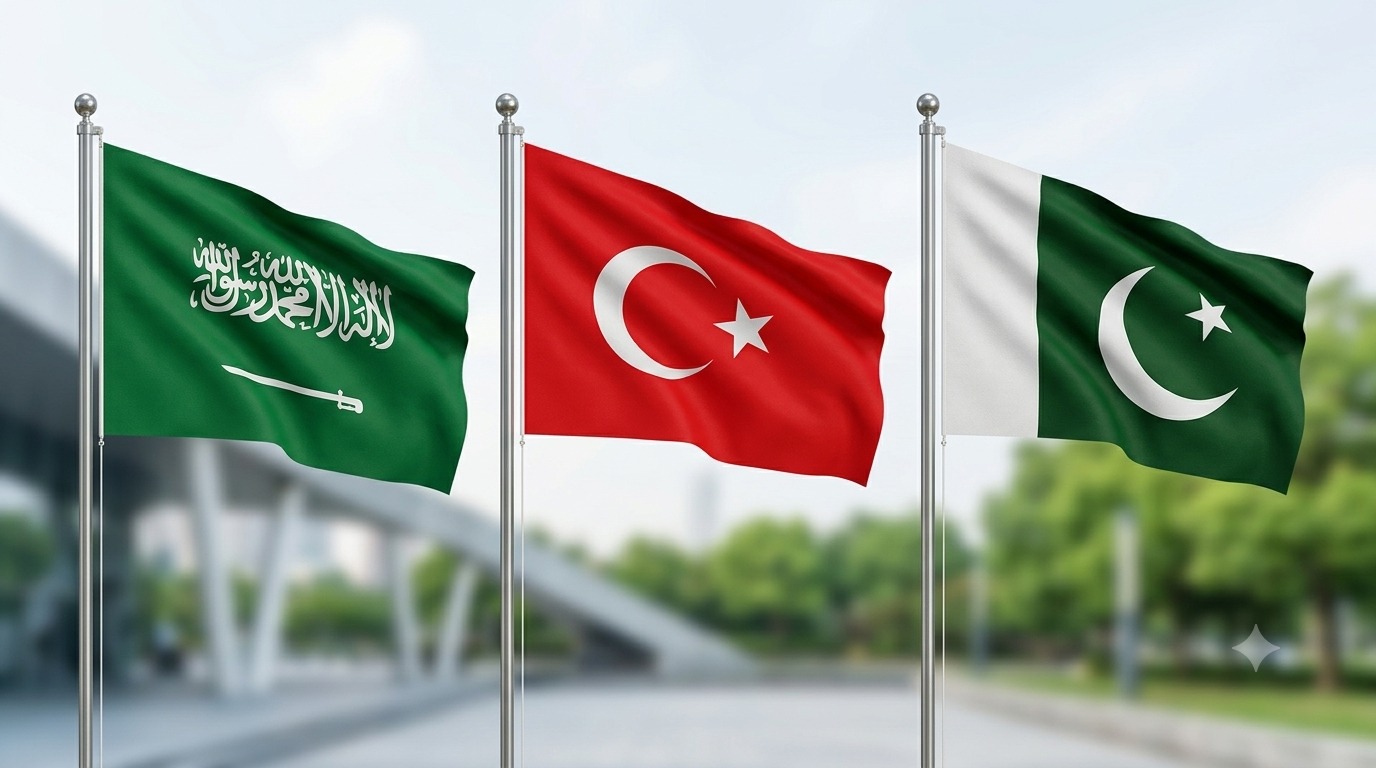
The agreement, signed in Mecca on Friday, states that an armed attack against any of the three countries will be regarded as an attack against all three. The governments described the pact as defensive and said it was intended to strengthen collective security and promote regional stability.
The agreement follows almost a year of negotiations and brings together three influential states with different but complementary strategic assets. Turkey has NATO's second-largest military, Saudi Arabia is a leading global oil exporter and Pakistan is the only nuclear-armed Muslim-majority state.
The immediate backdrop is a widening regional conflict that has affected Gulf energy shipments and increased concerns over attacks against economic infrastructure. Saudi Arabia has faced attacks linked to Iran-backed groups, while the broader conflict has increased uncertainty around ports, energy facilities and shipping routes.
For businesses and investors, the significance lies in the potential evolution of regional security arrangements. A stronger defence relationship could improve deterrence if it becomes operational and coordinated. However, it could also alter the calculations of regional actors and introduce new strategic risks if the conflict expands.
The agreement's practical obligations remain less clear than its political symbolism. Reuters reported that the joint statement did not provide detailed commitments regarding the forces, resources or operational mechanisms that each country would provide. A Turkish official described the agreement as defensive and said it was not directed against a specific actor.
That distinction matters for markets. Investors will need to determine whether the pact becomes a functioning security mechanism or remains primarily a political signal.
Saudi Arabia's role is particularly important because the kingdom sits at the centre of global energy markets. Continued threats to its infrastructure could affect oil supply expectations, insurance costs and investment decisions across the region.
The agreement also signals a greater willingness among regional powers to develop security arrangements that are not entirely dependent on Washington.
What to watch: whether the three governments establish operational mechanisms, whether additional countries join the framework and whether attacks on Gulf infrastructure increase or decline. Those developments will help determine whether the pact changes the region's risk calculations in practice.