Under the binding agreement announced on 14 September 2026, the Government of Rwanda will receive a 25% interest in Almonty Rwanda, while Almonty will hold 75%. Rwanda’s contribution is the Shyorongi tungsten exploration concession, covering about 32 square kilometres in Rulindo District, together with a mineral-processing licence. The partnership is intended to combine existing Rwandan production with mobile processing, exploration and, ultimately, a centralised collection and processing facility.
The transaction matters because the capital being assembled is not aimed solely at discovering another mineral deposit. It is designed to build a platform connecting African mine supply to Western industrial demand.
The Transaction Is Structured Around Assets, Not Just Cash
One of the most important features of the agreement is the structure of Rwanda’s participation.
The government is not simply providing a concession to an outside investor in return for royalties or taxes. It is contributing the Shyorongi concession and processing licence in exchange for equity in the local venture. Almonty provides the operating platform, technical capability and majority ownership.
That gives the transaction a capital structure in which mineral rights and regulatory permissions become part of the equity contribution, rather than the government’s role being confined to that of regulator or landlord.
Almonty Rwanda is also expected to acquire ore, pre-concentrate, and panning tailings from existing Rwandan mining licence holders, including small-scale operators. Material can initially be sold or upgraded, with lower-grade material potentially sent to Almonty’s existing facilities while the Rwandan processing infrastructure is developed.
This is significant from a deployment perspective. The venture does not have to wait for the Shyorongi exploration programme to generate production before beginning to build a commercial supply chain.
Existing Production Provides the First Layer of Deal Flow
Rwanda already has a meaningful tungsten production base.
US Geological Survey data ranks Rwanda as the world’s sixth-largest tungsten producer in 2024, accounting for about 1.6% of global production. Rwanda produced an estimated 2,741 tonnes of tungsten mine concentrates in 2024, containing about 1,300 tonnes of tungsten.
That production is important to the Almonty structure because the initial opportunity is based partly on material that is already being produced.
The model combines three potential sources of supply: purchases from existing licence holders, recovery from mine tailings through a mobile processing unit, and future production from exploration at Shyorongi. A larger collection and processing plant is contemplated as the next stage.
For investors, this reduces one of the conventional risks associated with greenfield mining: the requirement to fund an extended period between exploration expenditure and first commercial output.
It does not remove execution risk. The central processing facility remains a future development stage, and Almonty says a more comprehensive investment and development agreement with the Rwandan government will be required for that phase.
The distinction is important. The announced transaction is binding; the full processing build-out remains a future investment decision.
The Capital Case Is Being Strengthened by Western Demand
The commercial rationale extends beyond Rwanda's domestic mining sector.
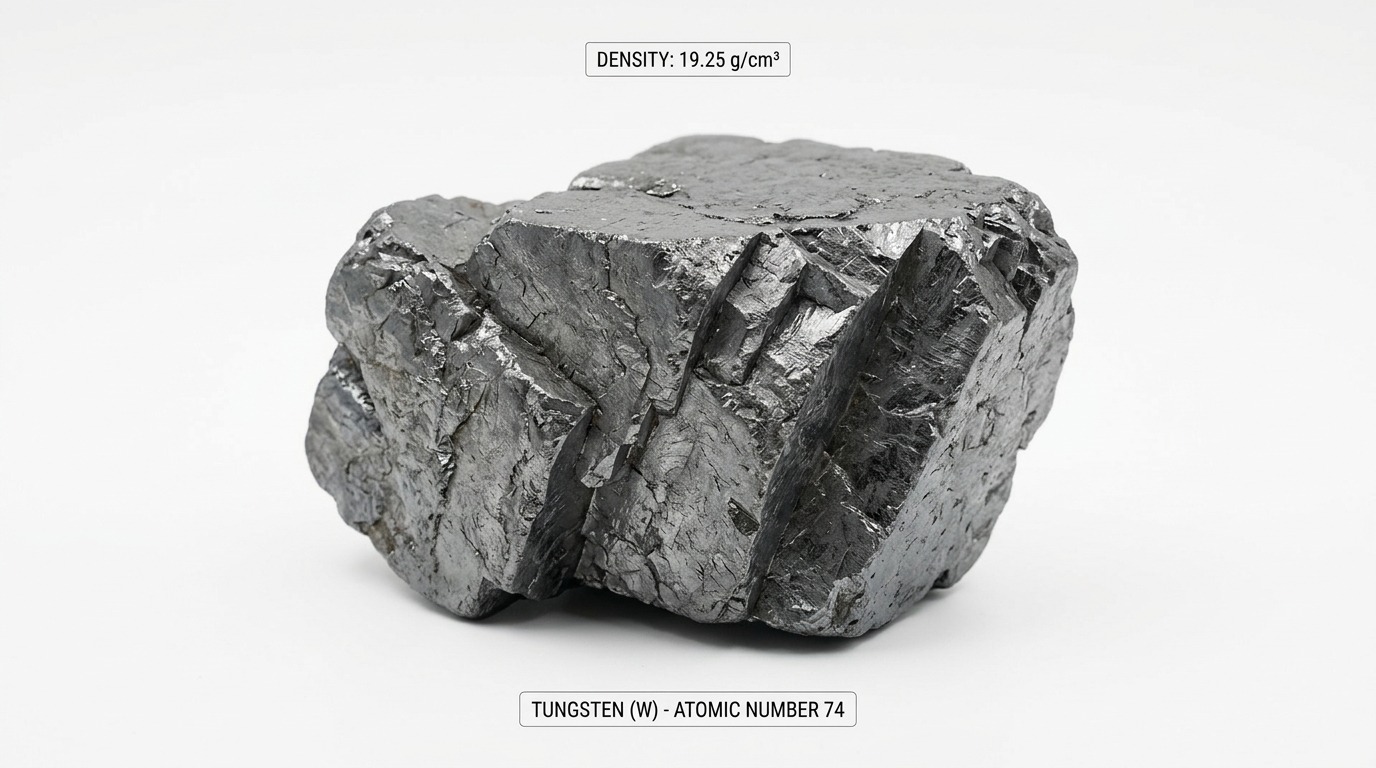
Tungsten is used in defence, aerospace, electronics, industrial machinery and other applications where its hardness, density and heat resistance are valuable. Global supply is heavily concentrated in China. US Geological Survey research estimates that China accounted for about 83% of global mined tungsten production in 2023.
The supply concentration has become more consequential following Chinese export controls introduced in 2025. The USGS reported that tungsten prices rose sharply during 2025 after China introduced export controls on selected tungsten products.
This changes the investment proposition for non-Chinese producers.
A mine that can demonstrate reliable production, documented provenance and access to Western processing or end-users can command strategic relevance beyond its physical production volume.
Rwanda has already begun establishing that connection. Trinity Metals said in June that more than 320 tonnes of high-grade tungsten concentrate from its Nyakabingo mine had been shipped to Global Tungsten & Powders in Pennsylvania since an August 2025 commercial agreement, with the shipments accounting for up to 20% of US primary tungsten concentrate consumption according to the company.
The Almonty transaction therefore builds on an existing commercial pathway rather than attempting to create a Western market from scratch.
Traceability Is Becoming Part of the Asset
The next stage of the investment case is traceability.
From 1 January 2027, US defence procurement rules are due to extend restrictions on specified tungsten materials from covered countries through the supply chain to the mining or production of the tungsten ore or feedstock. Almonty says this makes documented origin increasingly important for tungsten entering covered US defence supply chains.
That creates a new investment consideration for African mining.
Historically, the question for a producer was largely whether it could extract, process and sell a mineral at an economic cost. For strategic minerals, buyers increasingly need to know where the material came from, how it moved through the supply chain and whether it meets applicable sourcing requirements.
Rwanda's new partnership explicitly incorporates processing and traceability into the proposed supply-chain architecture.
But that advantage comes with a significant diligence requirement.
ITSCI reported in July that official Rwandan data showed 13,295 tonnes of 3T exports in 2025, while ITSCI-monitored trade represented roughly half of those official exports. For tungsten specifically, ITSCI-recorded exports fell 18% in 2025 while Rwandan National Bank and international trade data showed increases. ITSCI cautioned that the datasets cover different parts of the market and that international tungsten trade data have their own limitations.
For capital providers, the implication is straightforward: traceability is not a marketing feature; it is part of the investment infrastructure.
Rwanda Is Seeking More Value From the Mineral Chain
The transaction also fits a broader effort by Rwanda to move its mining industry towards greater value addition.
Rwanda’s Mining Board reported that mineral export earnings reached $1.75 billion in 2024, up from $373 million in 2017, with the government targeting $2.17 billion in annual mineral export revenues by 2029 under its National Strategy for Transformation. The government has identified processing, mechanisation, exploration and investment as components of the sector’s development strategy.
The Almonty agreement fits that direction because the proposed investment extends beyond extraction.
Collection, upgrading, tailings recovery and processing create additional points at which value can potentially be captured inside Rwanda.
The economic question, however, will be how much of that value remains in the country after accounting for capital expenditure, operating costs, technology, financing, offtake arrangements, and international processing requirements.
That will become clearer only as the investment and development framework for the processing plant is negotiated.
The US Connection Makes the Transaction Strategically Different
The partnership was introduced by the US Department of State and is aligned with the 2025 US-Rwanda Framework for Shared Economic Prosperity. It therefore sits within a wider effort to develop critical-mineral supply chains outside highly concentrated sources.
That geopolitical dimension is commercially relevant.
The US government has increasingly treated critical minerals as a supply-chain and national-security issue, arguing that dependence on concentrated foreign suppliers creates vulnerabilities for defence and advanced manufacturing.
At the same time, Washington has linked mineral investment in the Great Lakes to wider efforts to establish more transparent and legal regional supply chains. The US Treasury has sanctioned entities and individuals over alleged illicit mineral flows from eastern Democratic Republic of Congo, while supporting the Regional Economic Integration Framework associated with the Washington Accords.
That places Rwanda's tungsten strategy in a complicated investment environment.
The commercial opportunity is strengthened by Western demand for diversified supply. But the same environment means investors and buyers will scrutinise provenance, chain-of-custody controls and regional mineral flows more closely.
The Real Deal Flow Is Still Ahead
The 14 September transaction should therefore be viewed as the first layer of a broader capital programme rather than the completed investment story.
The immediate opportunity is to aggregate existing material and improve recovery through mobile processing. The next stage is exploration at Shyorongi. Beyond that sits the larger capital requirement for a centralised collection and processing plant.
Each stage creates a different financing question.
The first requires working capital and commercial relationships with existing producers. The mobile unit requires equipment investment and operating capital. Exploration requires risk capital. A central processing facility will require substantially larger project finance, equity or strategic investment, supported by sufficient feedstock and credible offtake arrangements.
That sequencing is precisely what makes the transaction relevant to a Deal Flow Tracker.
The headline deal is the 25% government stake. The deeper investment story is the pipeline that follows it.
What Investors Should Watch Next
Several milestones will determine whether the Rwanda-Almonty platform develops from a strategic partnership into a larger investable critical-minerals asset.
First, feedstock agreements. The ability to secure reliable volumes from existing mining licence holders will determine how quickly the platform can establish commercial throughput.
Second, mobile processing deployment. The timing, cost and recovery performance of the proposed tailings-processing operation will provide an early test of the operating model.
Third, Shyorongi exploration. The value of the 32-square-kilometre concession ultimately depends on what exploration establishes about its resource potential.
Fourth, the processing investment agreement. The proposed centralised plant is likely to be the most important future capital event. Its financing structure, ownership, capacity and offtake arrangements will reveal whether the partnership can move from mineral aggregation to deeper domestic processing.
Fifth, traceability and market access. The ability to demonstrate compliant, verifiable supply chains will become increasingly important as Western buyers apply stricter sourcing requirements.
Sixth, regional integration. Rwanda's tungsten strategy cannot be viewed entirely in isolation from the wider Great Lakes mineral system, particularly given the scrutiny surrounding mineral flows from eastern DRC. The commercial premium attached to a non-Chinese supply chain will depend partly on confidence in the integrity of its origin data.
The Broader African Capital Signal
Rwanda's tungsten partnership illustrates a broader change in African critical-minerals investment.
The opportunity is no longer limited to finding deposits and exporting concentrates. Investors are increasingly being asked to finance the infrastructure around the mineral: collection systems, processing plants, logistics, traceability, testing, certification and long-term offtake.
That expands the potential deal universe.
It also raises the capital threshold.
For African producers, access to Western strategic demand can improve the commercial case for new investment. For international investors, governments that contribute concessions, licences, infrastructure or equity can reduce certain project-development barriers. For buyers, diversified African supply can provide an alternative to concentrated global production.
But none of those advantages guarantees a successful project.
The Rwanda-Almonty transaction will ultimately be judged by its ability to convert a strategic agreement into reliable feedstock, financed processing capacity, traceable production and contracted demand.
Rwanda has secured the first piece of that sequence. The next question is how much capital follows.
Sources
U.S. Geological Survey — Mineral Commodity Summaries 2026, Tungsten
U.S. Geological Survey — China mineral production and supply-chain report
Rwanda Mines, Petroleum and Gas Board — Mining sector export strategy
U.S. Department of the Treasury — Conflict-minerals sanctions and regional supply chains
U.S. Treasury — DRC/Rwanda critical-minerals and regional integration context
The EastAfrican — Rwanda-Almonty tungsten processing agreement
Rwanda Embassy in the United States — Rwanda-US strategic dialogue