In September, CDG Invest Growth and Mediterrania Capital Partners agreed to jointly acquire a stake in Société Nouvelle des Conduites d’Eau (SNCE), a Moroccan company specialising in water equipment and hydraulic infrastructure. The transaction includes other co-investors, while SNCE’s founding Laraqui family is expected to remain a reference shareholder. The deal remains subject to regulatory approvals.
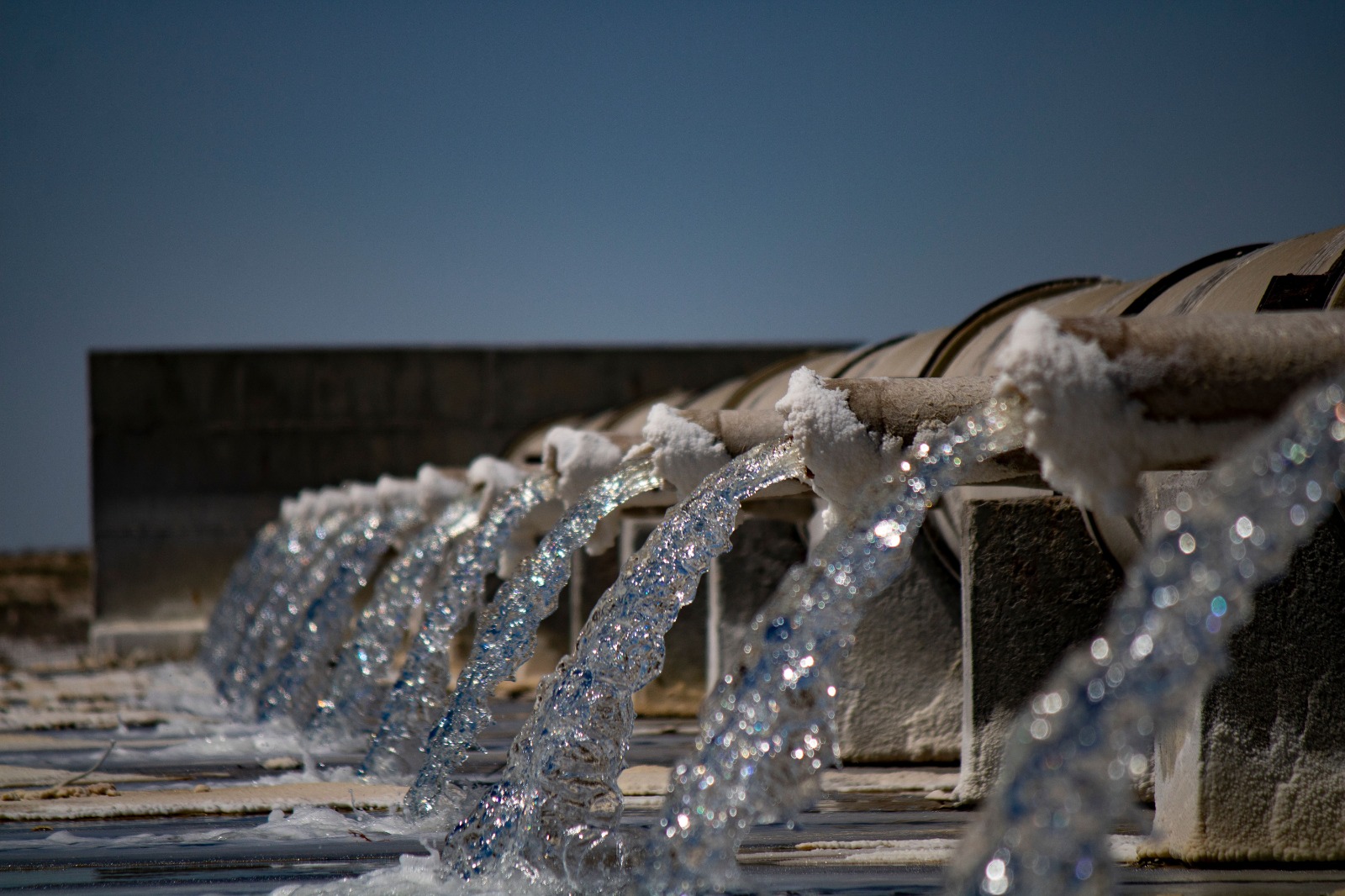
The significance of the transaction is broader than the acquisition itself. SNCE operates across areas including drinking-water infrastructure, sanitation, wastewater treatment, irrigation, desalination and water transport, giving the investors exposure to multiple parts of a market that Morocco is now treating as strategic infrastructure.
At the same time, Morocco has committed to a large-scale expansion of water infrastructure. ONEE’s 2026–2030 capital investment plan allocates MAD42.1 billion to drinking-water activities, with 72% of the overall electricity-and-water investment programme expected to be financed directly by the private sector. The plan aims to increase desalination capacity serving drinking-water needs to more than 1.3 billion cubic metres a year, potentially supplying 63% of drinking-water requirements by the end of the period.
The investment case is therefore shifting from a narrow question of whether Morocco needs more water to a broader question: which companies, technologies and infrastructure platforms will be capable of delivering, moving, treating, monitoring and maintaining that water at scale?
Key Judgement
The SNCE transaction suggests that institutional investors are looking beyond individual desalination plants towards the companies that sit underneath the infrastructure cycle.
That distinction matters.
A desalination plant is a discrete infrastructure asset. A company that designs, manufactures, installs and maintains pipelines, hydraulic systems, wastewater facilities, and desalination infrastructure can participate across multiple projects and investment cycles.
For private-equity investors, this can provide a different risk and return profile from owning a single long-duration infrastructure concession. It creates exposure to recurring infrastructure demand while retaining the possibility of operational expansion, regional growth and consolidation.
The SNCE transaction is therefore best understood as a bet on execution capacity within a strategic scarcity market, rather than simply a bet on water scarcity.
What Changed: Water Became a Capital-Allocation Issue
Morocco's water strategy has been reshaped by prolonged drought, declining water availability and rising demand from households, agriculture and industry.
The country's policy response increasingly combines dams, inter-basin transfers, desalination, network rehabilitation, water-efficiency measures and new infrastructure. Morocco has also been expanding the role of private capital in delivering that infrastructure.
In July, ONEE approved its 2026–2030 capital investment programme. Drinking-water investment alone is budgeted at MAD42.1 billion. The programme focuses on securing production, strengthening rural supply and improving the efficiency of existing networks.
Desalination is becoming particularly important. ONEE expects drinking-water desalination capacity to exceed 1.3 billion cubic metres annually by the end of the programme, compared with 13% of drinking-water needs in 2025 and less than 8% in 2023.
Reuters reported in December that Morocco was targeting desalination for about 60% of its drinking-water needs by 2030, with projects under construction and future tenders expected to produce around 1.7 billion cubic metres annually.
This creates something investors understand well: a visible, policy-backed pipeline of infrastructure demand.
Why SNCE Matters to Institutional Investors
The SNCE transaction is important because it sits one layer below the headline infrastructure projects.
CDG Invest Growth and Mediterrania Capital Partners are not simply acquiring exposure to a single water plant. Their target operates across equipment and hydraulic projects, including pipelines, drinking-water systems, sanitation, wastewater treatment, irrigation, desalination and water transport.
That gives the transaction several characteristics attractive to growth-oriented institutional capital.
First, the addressable market is being supported by public investment.
Second, the underlying need is not discretionary. Water infrastructure must be maintained and expanded irrespective of short-term economic cycles.
Third, the sector is becoming technologically more sophisticated. Desalination, digital metering, network monitoring, leakage reduction and energy-efficient water production require specialised engineering and operational capabilities.
Fourth, Morocco's infrastructure programme creates opportunities for companies with the capacity to expand beyond domestic demand.
MCP has indicated that it intends to support SNCE's industrial capabilities, broaden its offering and pursue international expansion, including in West Africa.
That regional dimension could become significant. Morocco already has an established base of companies operating across African infrastructure, finance and industrial markets. A successful domestic water-infrastructure platform could therefore become a vehicle for exporting expertise and pursuing projects elsewhere on the continent.
The Capital Stack Is Becoming More Sophisticated
The SNCE transaction is only one part of a wider financing architecture emerging around Moroccan water.
In July, the European Bank for Reconstruction and Development approved up to €250 million for ONEE's Water Performance Improvement Programme, comprising a €120 million committed tranche and a €130 million uncommitted tranche. The financing is guaranteed by Morocco's national credit-guarantee institution, Tamwilcom.
The programme targets rehabilitation and modernisation of potable-water production infrastructure, reduction of water losses, improved network performance and modernisation of metering and monitoring systems.
This is significant because it illustrates how different forms of capital can occupy different parts of the same infrastructure ecosystem.
Public and development-finance institutions can provide long-term financing, guarantees and risk mitigation.
Private-equity investors can provide growth capital and operational expertise to infrastructure companies.
Commercial lenders can finance projects and working capital.
Strategic investors can provide technology and market access.
The result is not a single water-investment market but an increasingly layered water infrastructure capital stack.
Scarcity Creates Demand, But Does Not Eliminate Investment Risk
Water scarcity can make an infrastructure market strategically important. It does not automatically make every water project investable.
The economics still depend on tariffs, government support, offtake arrangements, construction costs, energy prices, financing terms, regulation, and the ability of operators to collect revenues.
Desalination presents a particular challenge because it is energy-intensive. The economics therefore become closely linked to electricity prices and the availability of low-cost renewable power.
This is one reason Morocco's water strategy is increasingly linked to its energy strategy.
The country's May 2025 agreement with a Moroccan-Emirati consortium involving the Mohammed VI Investment Fund, TAQA Morocco and NAREVA included plans for large-scale desalination powered by renewable energy, alongside water-transfer and electricity infrastructure. The programme envisaged 900 million cubic metres of annual desalination capacity and an 800-million-cubic-metre water-transfer project.
The implication for investors is straightforward: water infrastructure cannot always be analysed independently of energy infrastructure.
The cost of producing, pumping, treating and moving water depends partly on the cost and reliability of the power system supporting it.
The Next Investment Opportunity May Be Efficiency, Not Just Supply
The most visible water investments are desalination plants, dams and transfer pipelines.
But some of the more commercially interesting opportunities may sit in the less visible infrastructure around them.
ONEE's latest programme explicitly targets network efficiency and the reduction of water losses. The EBRD financing also includes modernisation of metering and monitoring systems.
That opens an investment universe spanning:
water-loss reduction;
smart metering;
network monitoring;
pumps and pumping systems;
treatment equipment;
wastewater reuse;
industrial water recycling;
digital water-management platforms;
energy-efficient desalination;
pipeline manufacturing;
engineering and maintenance services.
These businesses can potentially generate recurring revenues without requiring investors to own the underlying public infrastructure.
That distinction may become increasingly important as African governments seek private capital while retaining strategic control over essential services.
Morocco Is Building a Template for Public-Private Water Investment
Morocco's approach is also notable because it combines state planning with institutional and private-sector participation.
The country's 2026–2030 investment plan provides a clear pipeline. Development institutions are supplying financing and guarantees. Private investors are acquiring companies capable of executing projects. International groups are participating in major infrastructure programmes.
The World Bank's 2026 Morocco Climate & Risk Finance Programme adds another layer: it includes a project-preparation facility intended to develop commercially viable projects in areas including water infrastructure, while using blended-finance structures and capital-market tools to help mobilise private investment.
This is precisely the type of structure required to turn water scarcity into an investable pipeline.
Institutional investors generally need more than evidence of demand. They need projects that can be prepared, contracted, financed, constructed and operated within a sufficiently predictable framework.
Morocco is increasingly building that framework.
The African Opportunity Is Larger Than Morocco
The investment logic extends beyond Morocco.
In July, 14 African countries and six regional organisations endorsed the N'Djamena Declaration on Water, calling for greater investment, stronger institutions and increased private-sector participation in water infrastructure. The declaration specifically identified public-private partnerships, concessions, delegated management and innovative financing as mechanisms for bringing capital and expertise into the sector.
That points to an emerging continental investment theme.
Africa's water challenge is not only about constructing more physical supply. It involves financing networks, improving utility performance, reducing losses, building treatment capacity, supporting irrigation, securing industrial water supplies and developing systems capable of coping with increasingly variable rainfall.
For investors, this potentially creates multiple entry points across the value chain.
Morocco's SNCE transaction is therefore a useful case study because it demonstrates how institutional capital can enter the water economy through an operating company rather than directly through a single infrastructure project.
Risk Watch
The investment thesis still carries several risks.
Execution risk: large infrastructure programmes can face procurement delays, construction overruns and permitting constraints.
Tariff and affordability risk: water is an essential service, which can constrain the ability to pass higher production costs through to consumers.
Energy risk: desalination economics remain sensitive to power costs.
Climate risk: drought can increase demand for infrastructure while simultaneously complicating the underlying resource environment.
Public-sector counterparty risk: many major projects depend on government entities, utilities or public-sector-backed offtake arrangements.
Currency and financing risk: infrastructure revenues and financing obligations may not always be denominated in the same currency.
Regional expansion risk: companies seeking to replicate Moroccan expertise elsewhere in Africa will encounter different regulatory, currency, political and project-finance environments.
These risks do not invalidate the investment thesis. They determine which parts of the water value chain are most capable of generating predictable cash flows.
What Investors Should Watch Next
The next stage of Morocco's water investment cycle is likely to be defined less by whether projects are announced and more by whether they reach financial close and construction.
For investors, the important indicators will include:
1. New desalination tenders — particularly projects with credible offtake and financing structures.
2. Private-sector participation — the extent to which the 72% private-financing expectation translates into signed transactions.
3. Water-infrastructure M&A — whether the SNCE transaction becomes part of a broader consolidation cycle.
4. Project-preparation activity — which water projects progress from concept to bankable investment opportunity.
5. Technology deployment — particularly digital monitoring, leakage reduction and energy-efficient desalination.
6. Regional expansion — whether Moroccan water companies begin winning larger contracts elsewhere in Africa.
7. Financing innovation — including guarantees, sustainability-linked structures, blended finance and institutional investment vehicles.
8. Operating performance — whether capital expenditure translates into measurable reductions in losses and improved reliability.
Conclusion
Morocco's water infrastructure market is evolving from a public-policy challenge into a multi-layered investment ecosystem.
The SNCE transaction provides one of the clearest recent examples. CDG Invest Growth and Mediterrania Capital Partners are positioning institutional capital behind a company whose capabilities span much of the infrastructure required to secure and manage water. The founding family remains involved, while the new investors bring capital and growth ambitions.
At the system level, Morocco is simultaneously committing billions of dirhams to water infrastructure, expanding desalination, attracting development-finance capital and creating mechanisms designed to bring private investors into climate-related infrastructure.
The deeper investment story is therefore not simply that water is scarce.
It is that scarcity is creating a sustained requirement for assets, companies and technologies capable of converting capital into reliable water supply.
For institutional investors, that distinction matters. The opportunity may increasingly sit not only in the next desalination plant, but in the businesses that design it, finance it, build it, power it, operate it, maintain it and ultimately export that capability across Africa.
That is where Morocco's water deal becomes a broader signal for African deal flow.
Sources
Morocco Ministry of Economy and Finance — ONEE 2026–2030 Capital Investment Plan
Morocco Competition Council — SNCE Joint Takeover Notification
Mediterrania Capital Partners — SNCE Transaction Announcement
Asafo & Co. — SNCE Transaction and Water Infrastructure Details
Morocco.ma — Morocco-UAE Strategic Water and Energy Infrastructure Programme
World Bank — N’Djamena Declaration on Water Security in Africa
World Bank — Morocco Country Partnership Framework 2026–2035
African Development Bank — Morocco Municipal Infrastructure Financing