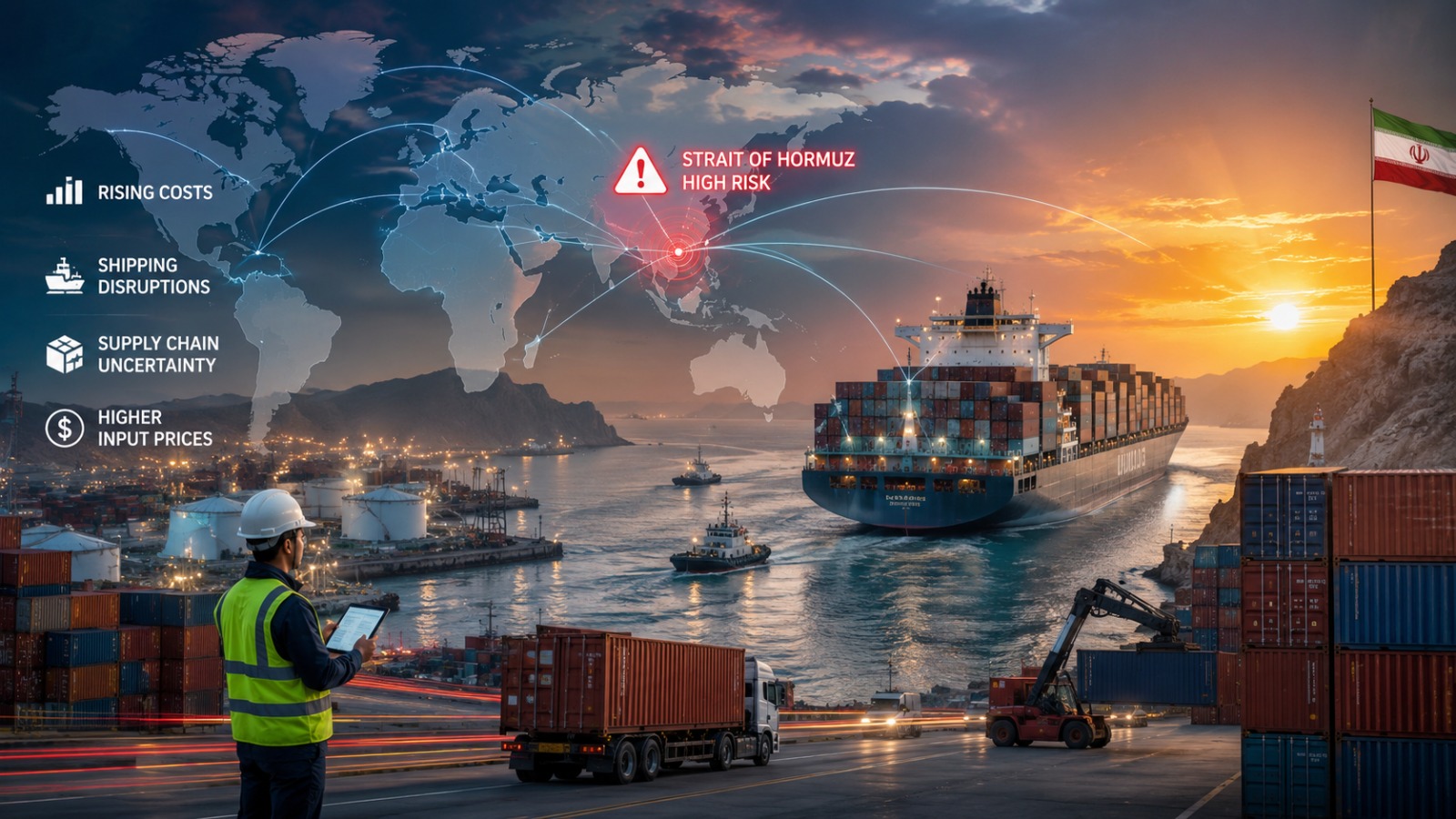
The waterway, which carries a significant share of global oil and liquefied natural gas shipments, has become a growing focus for corporate risk managers amid heightened geopolitical tensions in the Middle East. While trade flows have largely continued, logistics providers and manufacturers say uncertainty surrounding the route is already influencing freight pricing, inventory decisions and procurement strategies.
Industrial companies across Europe, Asia and North America are evaluating alternative sourcing arrangements and increasing stock levels of critical components in an effort to reduce potential exposure to transport disruptions. Businesses dependent on imported raw materials, chemicals and energy-intensive inputs are among the sectors most closely monitoring developments.
Shipping and insurance costs have also shown signs of rising as operators factor additional risk into trade routes linked to the region. Analysts say prolonged uncertainty could eventually affect production schedules, particularly in industries operating on lean inventory models.
The latest developments come as many manufacturers continue adjusting supply chains after disruptions caused by the pandemic, geopolitical fragmentation and changing trade policies. Corporate executives increasingly view resilience and diversification as strategic priorities rather than operational considerations.
Economists note that higher transportation and energy costs could feed into broader inflation pressures if disruptions persist. Such an outcome would complicate efforts by central banks seeking to balance economic growth with price stability.
For investors, the situation highlights the growing connection between geopolitical developments and corporate performance. Companies with diversified sourcing networks and stronger logistics flexibility may be better positioned to navigate prolonged uncertainty than competitors reliant on concentrated supply chains.
Businesses are expected to continue monitoring developments closely, with attention focused on shipping activity, energy markets and any policy measures that could affect trade flows through one of the world's most strategically important maritime corridors.