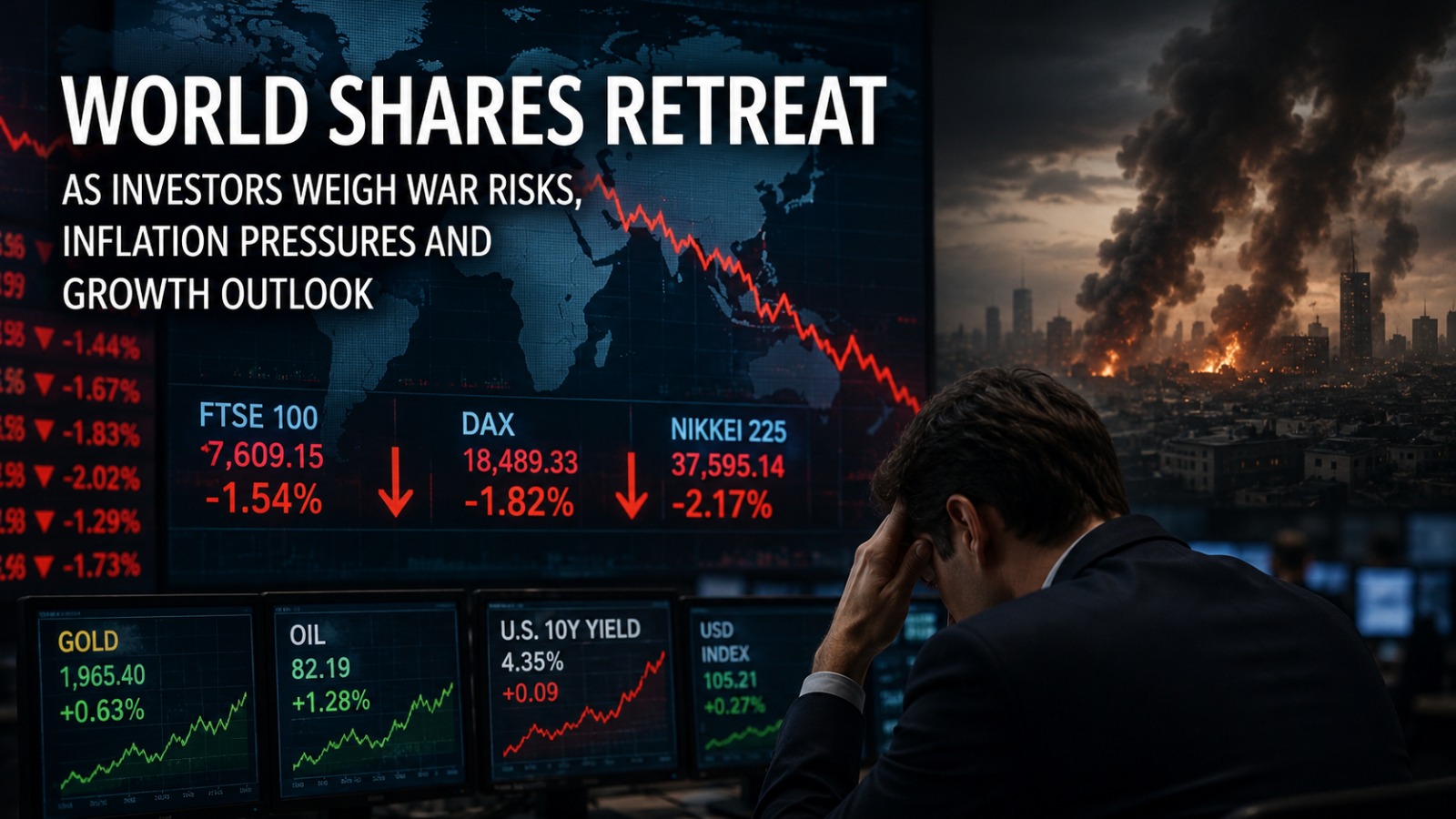
The regional selloff came as oil prices moved higher following renewed geopolitical tensions in the Middle East, while a broader correction in artificial intelligence-linked stocks extended across international markets. Together, the developments created a more cautious investment environment and prompted investors to reassess risk exposure.
Major European indices traded lower as losses in technology, industrial and consumer-focused sectors offset gains among some energy producers. Investors increasingly focused on how higher fuel costs and tighter financial conditions could affect earnings performance during the second half of the year.
The decline reflects a broader shift in market sentiment. Earlier expectations that inflation would continue moderating and allow central banks to begin reducing interest rates have become less certain as energy prices rise and geopolitical risks intensify.
For businesses, higher oil prices represent more than a commodity-market story. Rising transportation, logistics and manufacturing costs can affect operating margins, investment plans and consumer demand. Companies with complex international supply chains may face additional challenges if energy-related disruptions persist.
Technology stocks also remained under pressure as investors questioned whether valuations across some AI-related sectors had outpaced earnings expectations. The reassessment has become a key theme across global markets, particularly among growth-oriented companies reliant on strong future revenue projections.
Economists note that European markets are navigating multiple pressures simultaneously, including slower economic growth, elevated borrowing costs, geopolitical uncertainty and questions surrounding future monetary policy.
Bond markets reflected similar caution, with investors monitoring inflation expectations and central-bank signals for indications of how policymakers may respond to changing economic conditions.
For portfolio managers, the current environment reinforces the importance of balancing growth opportunities against risk management as geopolitical developments increasingly influence market behaviour.
What investors will watch next are inflation data releases, corporate earnings guidance and developments in energy markets that could determine whether recent market weakness proves temporary or signals a broader shift in investor sentiment.