Executives, investors and policymakers are navigating a business environment where political developments and technological transformation are becoming deeply interconnected, influencing decisions ranging from capital allocation and supply-chain management to workforce planning and competitive positioning.
Recent geopolitical tensions affecting energy markets, trade routes and international relations have reinforced concerns about operational resilience. Businesses are reassessing supplier concentration, market exposure and contingency planning as global risks become more difficult to predict.
At the same time, artificial intelligence continues to reshape corporate priorities. Companies are increasing investments in automation, advanced analytics, machine learning and digital infrastructure as they seek productivity improvements and new sources of growth.
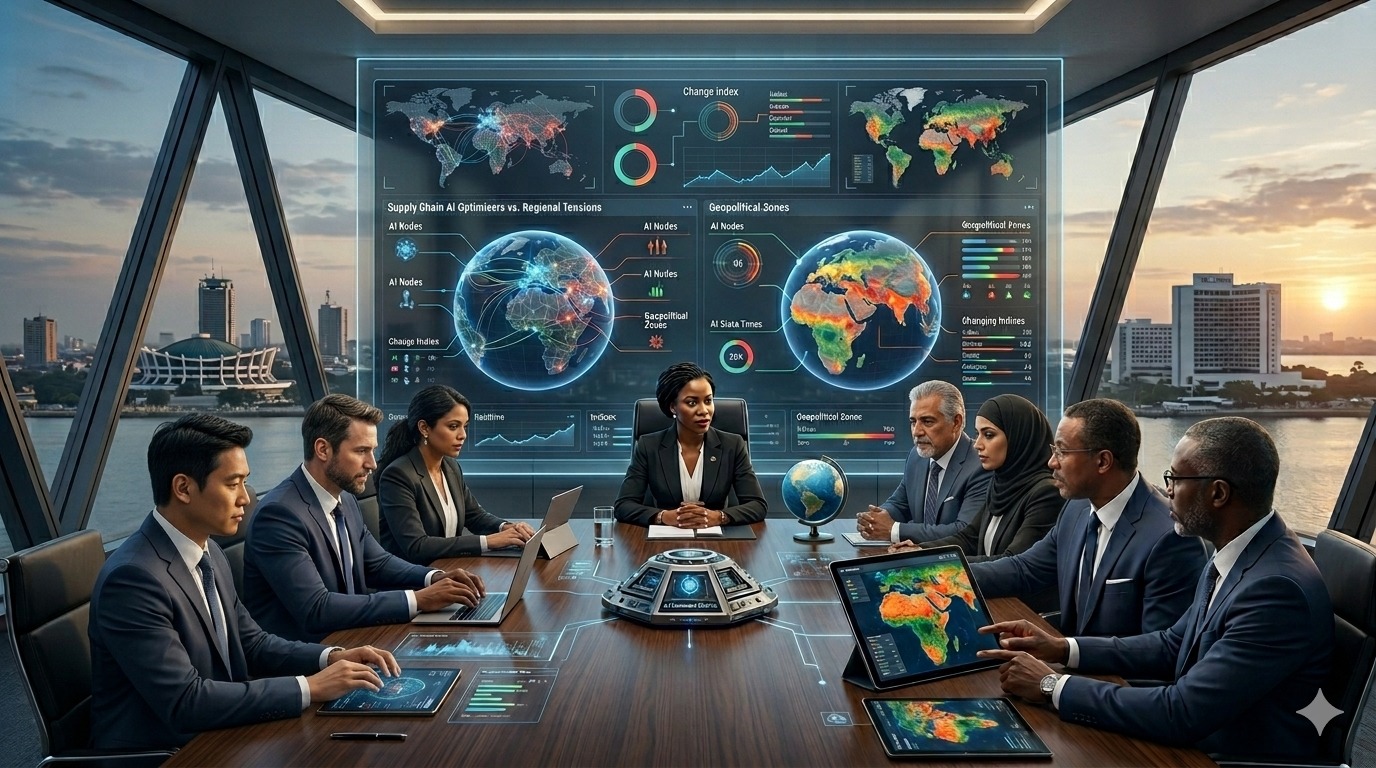
The combination of these trends is creating a new strategic reality for boardrooms. While AI offers opportunities to improve efficiency and competitiveness, geopolitical instability can increase costs, disrupt operations and complicate long-term planning.
Business leaders say resilience is becoming as important as growth. Organisations are increasingly evaluating how technology investments can strengthen operational flexibility while reducing exposure to external shocks.
Financial institutions, manufacturers, technology firms and logistics operators are among sectors making significant adjustments to strategy as they respond to changing economic and geopolitical conditions.
Analysts note that businesses are moving beyond traditional risk-management frameworks. Geopolitical developments are no longer viewed solely as external events but as factors capable of directly influencing revenues, investment decisions and shareholder value.
The rise of artificial intelligence is also creating new competitive dynamics. Companies that successfully integrate AI into operations may achieve substantial efficiency gains, while those that fail to adapt risk losing market position.
For investors, the intersection of geopolitics and technology is emerging as a key determinant of future corporate performance. Capital is increasingly flowing toward businesses viewed as both technologically capable and operationally resilient.
What executives will watch next is how governments regulate artificial intelligence, how geopolitical tensions evolve and whether companies can convert technological investment into measurable business outcomes while maintaining resilience in an increasingly uncertain world.