
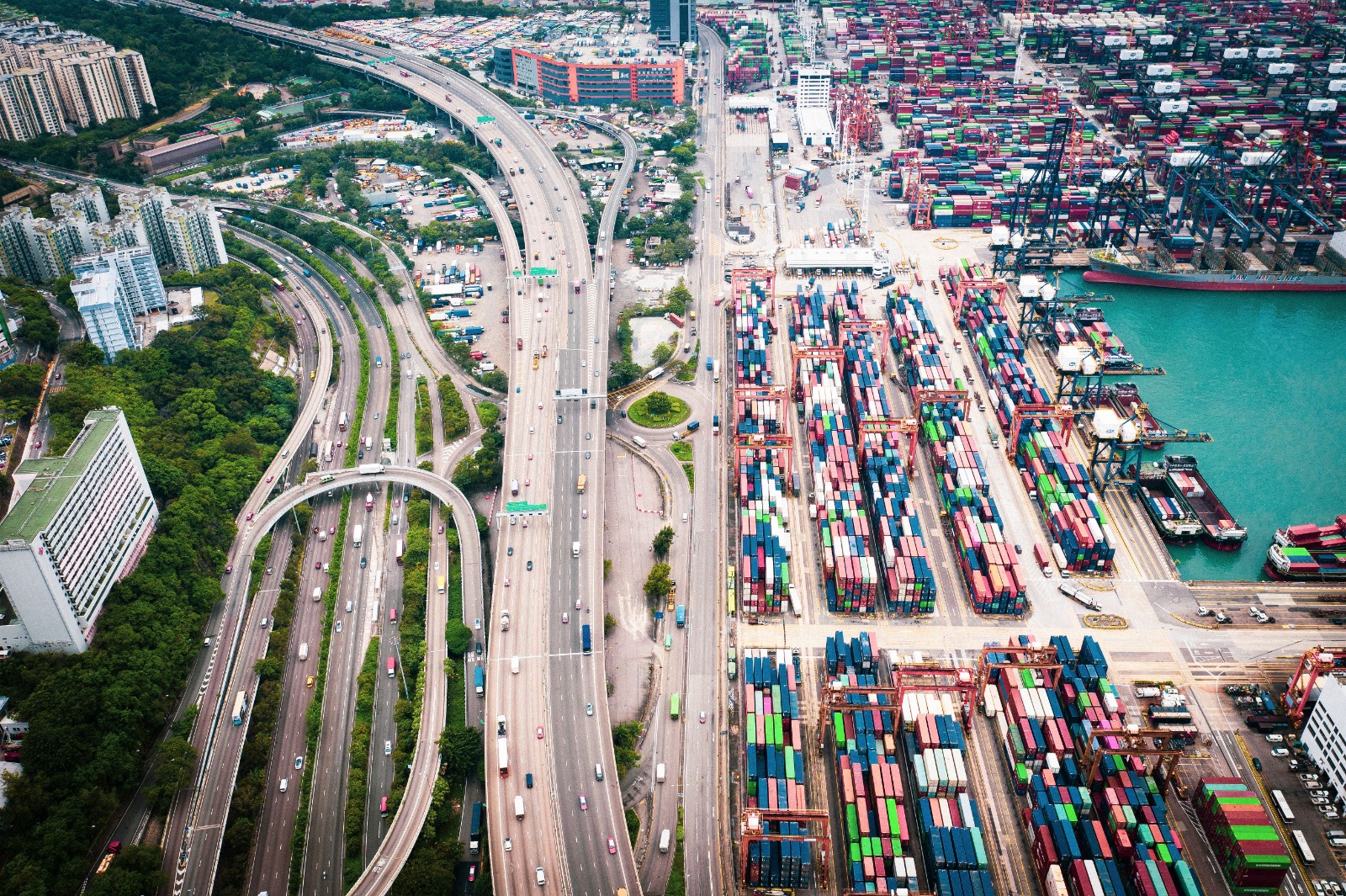
The African Continental Free Trade Area (AfCFTA) provides the framework for a larger continental market. But ports, railways, roads, border posts, warehouses, customs systems and logistics operators determine whether that market functions in practice.
This is creating a new strategic contest around Africa's trade corridors.
From the Lobito Corridor linking mineral-producing regions of the Democratic Republic of Congo (DRC) and Zambia with Angola's Atlantic coast, to the Djibouti–Addis corridor serving Ethiopia and the wider Horn of Africa, to the Douala–Bangui corridor connecting Central African Republic to international markets, governments and investors are increasingly treating transport corridors as economic infrastructure rather than simply roads and railways.
The significance is substantial.
A successful corridor can reduce the cost of moving goods, connect producers with larger markets, attract industrial investment and create regional supply chains. An inefficient corridor can do the opposite, making otherwise competitive African products too expensive to trade.
The emerging investment thesis is therefore straightforward:
Africa's ports and trade corridors are becoming strategic infrastructure for industrialisation, regional integration and supply-chain resilience.
Executive Summary
Africa's trade infrastructure is entering a period of accelerated investment and strategic repositioning.
The continent's maritime connectivity improved significantly between June 2024 and June 2025. UN Trade and Development reported that Africa recorded the largest regional improvement in liner shipping connectivity over that period, with an average increase of 10%. Cameroon was among the strongest individual performers, helped by expansion at the Port of Kribi.
But improved maritime connectivity does not eliminate the deeper problem.
The critical bottleneck increasingly lies in the connections between ports and inland production centres.
Africa can expand port capacity, but if containers then face unreliable railways, poor roads, congested borders, duplicated customs procedures and fragmented logistics systems, the economic benefit of the port remains constrained.
The World Bank's recent transport research illustrates the scale of the challenge. Its analysis identified 10 ports, 20 border crossings and 20 road segments as particularly important to African food supply chains. It estimates that 37% of locally produced food can be lost in transit because of slow processing, weak infrastructure and non-tariff barriers.
This makes corridor development an economic priority.
Recent financing decisions reinforce the trend. In June 2026, the World Bank approved a US$1.12 billion programme for the Douala–Bangui Economic Corridor, including a first phase of US$525 million for infrastructure rehabilitation, road safety and maintenance reforms. The 1,400-kilometre corridor carries more than 80% of the Central African Republic's external trade, yet faces transport costs of up to US$270 per tonne, journey times of nine to 12 days and numerous checkpoints.
In the Horn of Africa, new World Bank financing is targeting transport connectivity around the Djibouti–Addis corridor and northeastern Kenya, while additional financing has been committed to improve the Djibouti Regional Economic Corridor.
Meanwhile, the Lobito Corridor is evolving beyond a minerals-export route into a broader strategic infrastructure project. The Africa Finance Corporation is seeking between US$3 billion and US$5 billion from regional and international financiers for the next phase of development, with the corridor intended to connect mineral-producing areas of Zambia and the DRC with Angola's Atlantic port.
The strategic implication is clear:
The most valuable African trade corridors of the next decade will be those that connect ports not merely to mines or farms, but to industrial clusters, consumer markets and regional supply chains.
Why Trade Corridors Matter Now
AfCFTA Cannot Work Without Physical Connectivity
AfCFTA is designed to reduce the fragmentation of African markets.
But tariff liberalisation alone cannot create an integrated market.
A manufacturer in Ghana must still move goods to Côte d'Ivoire, Nigeria or Senegal. A Kenyan processor must still reach Uganda, Rwanda, Tanzania or the DRC. A Zambian producer must still move goods to a port or neighbouring market.
The physical cost and reliability of those journeys determine whether regional trade is commercially viable.
The African Development Bank has increasingly framed regional corridors as essential infrastructure for continental integration, arguing that efficient corridors can reduce transport costs, improve movement of goods and services and support regional economic development.
This changes the investment equation around AfCFTA.
The opportunity is not simply to finance trade.
It is to finance the infrastructure that makes trade possible.
The Port Is No Longer the Whole Story
For decades, African infrastructure strategies often concentrated on individual ports.
That model is becoming insufficient.
A modern trade corridor should be viewed as an integrated system:
Production → aggregation → road/rail → border → logistics hub → port → shipping route → destination market
A weakness at any point can undermine the entire chain.
The World Bank's Logistics Performance Index identifies six components of logistics competitiveness: customs efficiency, infrastructure quality, international shipments, logistics competence, tracking and tracing, and timeliness.
For investors, this means that port capacity alone is a poor measure of corridor competitiveness.
A port may have modern cranes and deep-water berths while exporters face days of delay inland.
The commercial value of infrastructure therefore increasingly depends on end-to-end reliability.
The New Geography of African Trade Corridors
Several corridors are becoming strategically important because of their ability to connect production centres with international markets.
Lobito: The Atlantic Route for Critical Minerals
The Lobito Corridor has become one of the clearest examples of how trade infrastructure is becoming intertwined with industrial strategy and geopolitics.
The route connects mineral-producing regions in the DRC and Zambia with Angola's Atlantic port.
Reuters reported in February 2026 that the wider project is expected to involve around 1,700 kilometres of rail infrastructure and could cost as much as US$6 billion by 2030. The corridor is designed primarily to move copper and cobalt, but its strategic importance extends to agricultural and industrial cargo.
The project is also attracting competition from alternative routes.
China-backed investment in the TAZARA railway provides an eastern route towards Tanzania's Indian Ocean coast, creating a broader contest over how Zambia and the DRC's mineral production reaches international markets.
For African governments, this competition can create negotiating leverage.
For investors, it signals that transport corridors are increasingly becoming part of the strategic infrastructure surrounding critical-mineral supply chains.
The larger opportunity will be whether mineral corridors can support local processing and manufacturing, rather than simply accelerating the export of raw materials.
Douala–Bangui: The Cost of Inland Access
The Douala–Bangui corridor illustrates a different dimension of the problem.
For the landlocked Central African Republic, the corridor is effectively an economic lifeline.
The World Bank describes it as carrying more than 80% of the country's external trade. Yet high transport costs, long journey times and numerous checkpoints significantly reduce the competitiveness of goods moving along the route.
The US$1.12 billion programme approved in June 2026 is therefore important not simply because of its size.
It demonstrates a shift towards treating entire economic corridors as integrated investment programmes.
Infrastructure rehabilitation, road safety, maintenance and institutional reforms are being combined rather than treated as separate projects.
That model could become increasingly important elsewhere on the continent.
Djibouti–Addis and the Horn of Africa
The Horn of Africa provides another example of corridor-led integration.
Ethiopia's landlocked geography makes access to Djibouti strategically important for imports and exports.
New World Bank financing is intended to improve connectivity, reduce transport costs and strengthen logistics efficiency along the Djibouti–Addis Southern Corridor.
Further investment approved in 2026 is targeting northeastern Kenya and wider Horn of Africa connectivity, with the World Bank expecting major reductions in journey times and trade costs.
The broader lesson is that ports and inland corridors must be planned together.
The Supply-Chain Opportunity
The most important opportunity may not be transport itself.
It is what happens around transport infrastructure.
When a corridor becomes reliable, businesses can begin making long-term investment decisions.
Warehouses emerge.
Cold-chain facilities become viable.
Manufacturers establish plants closer to transport networks.
Farmers gain access to larger markets.
Distribution centres develop.
Financial institutions create trade-finance products.
Logistics technology companies gain customers.
Industrial parks become commercially viable.
This creates an economic multiplier around corridors.
The strategic objective should therefore be to transform transport routes into economic corridors.
From Commodity Corridors to Industrial Corridors
Africa's existing infrastructure often reflects a historical commodity-export model.
Railways and roads were frequently designed to move minerals and agricultural commodities from production areas towards ports.
The next generation of corridors should be designed differently.
They should connect:
agricultural production to processing facilities;
mines to mineral-processing and manufacturing clusters;
industrial parks to consumer markets;
ports to inland logistics centres;
SMEs to regional distribution networks;
renewable-energy projects to industrial users.
This is where AfCFTA becomes strategically important.
A functioning continental market increases the potential demand available to factories located along major corridors.
Instead of producing for a single national market, manufacturers can potentially serve multiple countries.
That can justify investments in larger factories, logistics facilities and specialised supplier networks.
The Logistics Bottleneck
The greatest risk to Africa's trade ambitions may be the gap between infrastructure investment and operational efficiency.
The World Bank's research shows that delays at ports, border crossings and multimodal facilities remain major constraints on international trade. It also notes that end-to-end digitalisation can significantly reduce port delays.
This makes digital infrastructure increasingly important.
Digital customs
Single-window systems can reduce duplicated documentation.
Cargo tracking
Real-time tracking improves supply-chain visibility and reduces uncertainty.
Electronic payments
Digital payments can reduce transaction friction and improve formalisation.
Data integration
Connecting customs, ports, trucking companies, freight forwarders and warehouses can allow cargo to move through the system with fewer manual interventions.
Artificial intelligence
AI and satellite-based systems are beginning to create new possibilities for monitoring border congestion, predicting delays and optimising freight movement. The World Bank reported in July 2026 that satellite data and AI could help transform African land borders into more efficient and transparent gateways.
The next generation of African logistics infrastructure will therefore be both physical and digital.
Who Stands to Gain
Manufacturers
Reliable corridors reduce delivery uncertainty and expand addressable markets.
For manufacturers, the commercial value is not simply lower freight costs.
It is the ability to promise customers predictable delivery.
That is essential for building regional supply chains.
Agribusiness
Agricultural producers benefit from shorter journey times, improved cold chains and better access to processors and urban consumers.
The impact can be particularly significant for perishable products.
Mining Companies
Mineral producers gain alternative export routes and potentially greater bargaining power between competing corridors.
However, governments should use corridor investment to negotiate greater domestic processing and local value addition.
Logistics Companies
Freight forwarders, trucking companies, warehousing operators, shipping lines and logistics technology firms are positioned to benefit directly from increasing trade volumes.
Investors
The investment opportunity extends across infrastructure and services:
ports;
railways;
roads;
warehouses;
industrial parks;
cold storage;
trucking fleets;
customs technology;
supply-chain software;
trade finance;
renewable-powered logistics.
Governments
Efficient corridors can expand the tax base, attract industrial investment, reduce food losses and strengthen regional integration.
But governments also face the responsibility of ensuring that corridor investment produces broad economic value rather than functioning purely as export infrastructure for multinational commodity producers.
Strategic Risks
Infrastructure Without Volume
Large infrastructure projects can struggle when cargo volumes are insufficient.
Investors should therefore assess not only engineering feasibility but also the underlying trade flows.
Corridor Concentration
Dependence on a single port or route creates systemic risk.
Businesses should develop alternative routes where commercially viable.
Political and Regulatory Risk
Cross-border corridors require cooperation between multiple governments.
Changes in customs rules, border procedures, taxation or political relations can disrupt trade.
Security
Conflict, insurgency, organised crime and cargo theft can significantly increase logistics costs.
Security must therefore be treated as part of corridor economics.
Climate Exposure
Flooding, extreme heat, drought and coastal risks can disrupt roads, railways and ports.
Climate resilience should be embedded into infrastructure design rather than treated as a secondary consideration.
The Raw-Export Trap
Perhaps the most important strategic risk is building excellent infrastructure that simply makes it easier to export unprocessed commodities.
Africa's corridor strategy should ultimately support value addition and industrialisation, not merely faster extraction.
What Decision-Makers Should Do Next
For Governments
Governments should shift from isolated infrastructure projects towards corridor strategies.
Priority should be given to:
Removing border bottlenecks.
Digitising customs and cargo documentation.
Improving road and rail connections to ports.
Developing logistics and industrial clusters around corridors.
Harmonising regional standards.
Strengthening corridor security.
Building climate resilience into transport infrastructure.
The objective should be to measure corridors by trade outcomes, not kilometres of road or rail constructed.
For Investors
Investors should examine the ecosystem surrounding each corridor.
The strongest opportunities may not sit inside the headline infrastructure project.
They may exist in the surrounding network of warehouses, cold chains, trucking, freight technology, industrial parks, energy infrastructure and trade finance.
Investors should also assess:
committed cargo volumes;
anchor customers;
port capacity;
inland connectivity;
border performance;
regulatory stability;
competing corridors;
political risk;
climate exposure.
For Manufacturers
Manufacturers should begin treating logistics architecture as a strategic component of location decisions.
The cheapest factory location is not necessarily the most competitive.
A slightly higher-cost production site with reliable power, rail access, warehousing and predictable port connectivity may generate significantly better economics over time.
Companies should therefore map entire supply chains before committing to new industrial capacity.
For Development Finance Institutions
Development finance should increasingly support corridor ecosystems, rather than isolated infrastructure assets.
A new road has limited economic impact if the border remains inefficient.
A modern port has limited value if inland rail capacity is inadequate.
A railway has limited industrial impact if there are no processing facilities or manufacturers along the route.
Financing should therefore combine transport infrastructure with trade facilitation, industrial development and private-sector investment.
Executive Outlook
Africa's trade corridors are entering a new strategic phase.
The question is no longer simply whether the continent can build more roads, railways and ports.
The question is whether these assets can be integrated into a functioning continental supply-chain system.
AfCFTA provides the market framework.
Ports provide global connectivity.
Railways and roads provide physical access.
Digital customs provide operational efficiency.
Logistics companies provide execution.
Industrial clusters provide demand.
Finance provides scale.
When these components operate together, corridors become engines of economic transformation.
The significance of current investment; from Lobito and Douala–Bangui to the Horn of Africa and expanding maritime connectivity, is therefore larger than individual infrastructure projects.
They represent an emerging reconfiguration of how Africa connects its producers, consumers and natural resources to regional and global markets.
For investors, this creates a new infrastructure opportunity.
For manufacturers, it creates a pathway towards regional scale.
For governments, it creates an opportunity to convert infrastructure spending into industrial development.
And for African businesses, it creates the possibility of building supply chains that are continental by design rather than national by default.
The strategic winners will not necessarily control the largest port.
They will control, or participate in the most reliable end-to-end corridor.
That is the central trade-infrastructure opportunity emerging across Africa.
Sources & Methodology
This report applies Aldrenor's Premium Intelligence methodology, combining current institutional data, infrastructure investment announcements, trade-policy developments and market reporting to assess the strategic significance of African trade corridors.
The analysis prioritises primary and institutional sources, including the World Bank, African Development Bank, UN Trade and Development, AfCFTA-related institutions and development-finance organisations. Current project developments and financing activity were cross-checked against Reuters reporting where appropriate.
Particular attention was given to end-to-end corridor performance rather than individual infrastructure assets. The assessment considers port connectivity, inland transport, border efficiency, customs, digitalisation, industrial clustering, financing, security and climate resilience.
The report uses the latest available information as of August 2026. Historical indicators are retained where they remain the latest authoritative benchmark, for example, the World Bank's Logistics Performance Index, whose most recent global edition remains the 2023 LPI.
The report is intended for strategic and informational purposes and does not constitute investment, financial or legal advice.