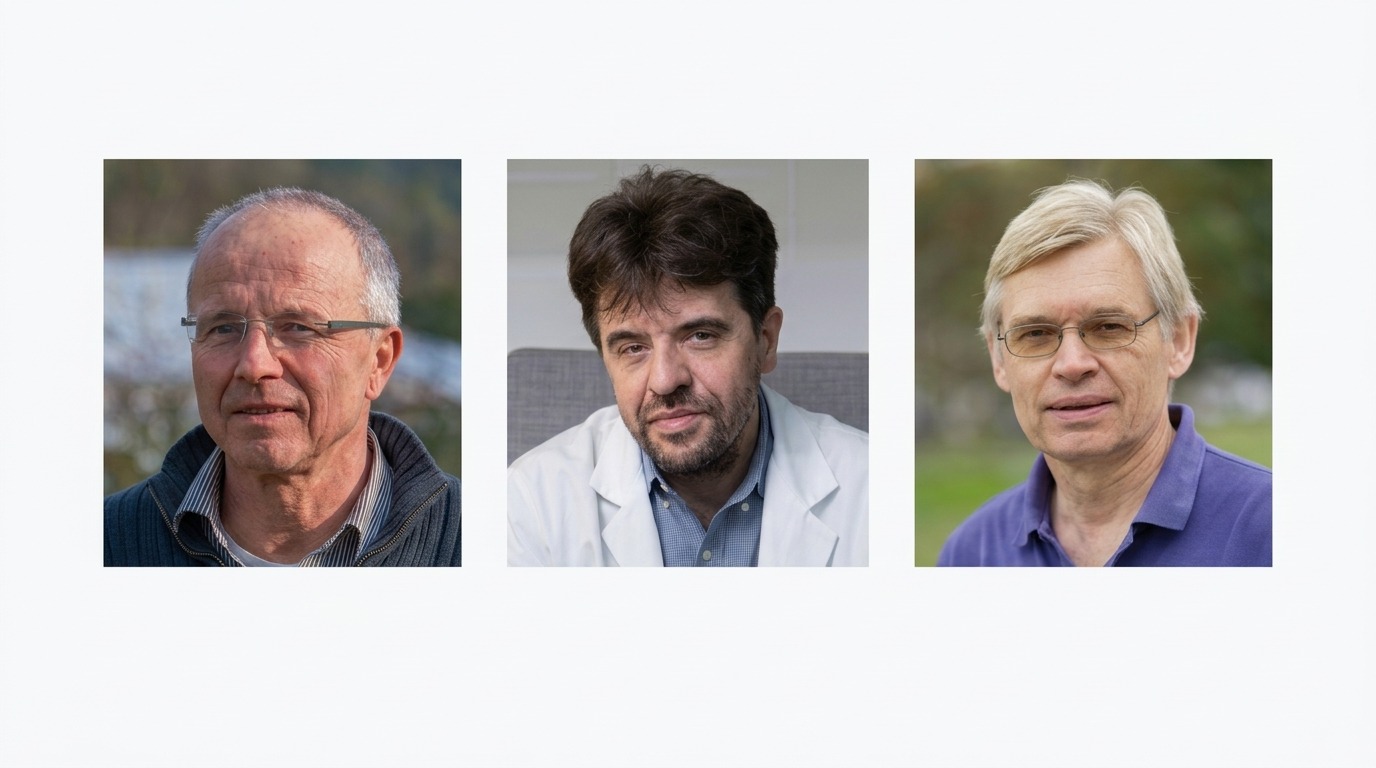
Karl Deisseroth, Peter Hegemann and Georg Nagel were awarded the prize for discoveries involving light-sensitive ion channels that allow scientists to activate or inhibit specific neurons with high precision. Their work has become an important tool in modern neuroscience and experimental medicine.
Optogenetics combines genetics, biology and optical technology to introduce light-sensitive proteins into selected nerve cells. Researchers can then use pulses of light to control those cells and observe how specific neural circuits influence behaviour and biological processes.
The technique has helped scientists investigate brain functions that are difficult to isolate using conventional approaches. By targeting individual populations of neurons, researchers can examine the relationship between neural activity and conditions affecting movement, memory, perception and behaviour.
The wider medical significance lies in the ability to study disease mechanisms at a much more precise level. Research using optogenetic approaches has contributed to investigations into conditions including Parkinson's disease, epilepsy, addiction and other neurological disorders.
The breakthrough also illustrates the increasing convergence between biological science and advanced technology. Modern neuroscience increasingly relies on tools capable of measuring and manipulating biological systems at microscopic scales, creating new opportunities for drug development and potential therapeutic approaches.
However, translating experimental techniques into widely available treatments remains a significant challenge. Many optogenetic applications remain at the research stage, and questions surrounding delivery methods, safety and long-term effects must be addressed before clinical use can expand.
For the scientific community, the Nobel recognition highlights the importance of technologies that allow researchers to move from observing the brain to experimentally manipulating its individual circuits.
The award is expected to stimulate further research into neural circuitry and neurological disease while reinforcing the growing role of interdisciplinary technologies in medicine. For patients and healthcare systems, the longer-term significance will depend on whether insights generated through optogenetics can eventually contribute to safer and more targeted treatments for neurological disorders.