
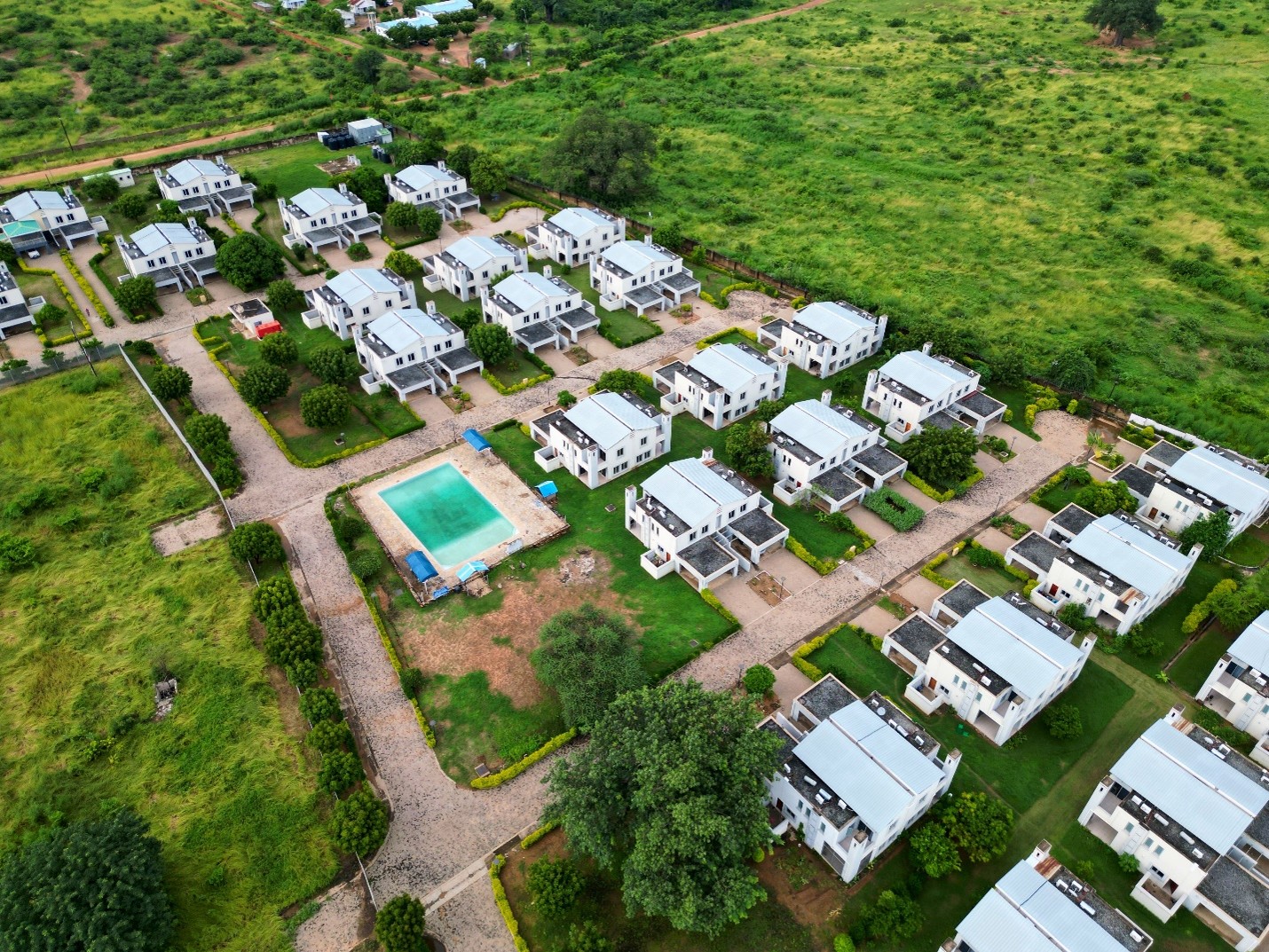
Yet the sector presents a paradox. While remittances remain one of Africa's most stable sources of external finance, diaspora-funded property investment continues to be constrained by fraud, opaque land administration, weak legal enforcement, construction delays and fragmented information. These risks have limited the ability of diaspora capital to contribute meaningfully to closing Africa's substantial housing deficit.
According to the World Bank, remittance flows to low- and middle-income countries reached US$685 billion in 2024, with Sub-Saharan Africa receiving approximately US$56 billion, reflecting continued resilience despite global economic uncertainty. At the same time, the United Nations Human Settlements Programme (UN-Habitat) estimates that Africa faces a housing shortage exceeding 50 million housing units, driven by rapid urbanisation, population growth and persistent affordability challenges.
These parallel trends present both an opportunity and a policy challenge. Diaspora capital has the potential to become an important source of long-term financing for residential development, affordable housing and urban regeneration. However, unlocking that potential will require more than encouraging investment. It will depend on strengthening land governance, improving regulatory certainty and developing trusted, transparent platforms capable of connecting diaspora investors with credible housing opportunities.
The strategic question is therefore no longer whether diaspora capital can support Africa's housing sector, but under what institutional conditions it can do so safely, efficiently and at scale.
Key Judgement
The principal barrier to greater diaspora participation in African real estate is not a lack of investor interest or available capital. It is a deficit of institutional trust. Countries and developers that improve transparency, digitise land administration, strengthen consumer protections and provide independent verification mechanisms are likely to attract a greater share of long-term diaspora investment than those relying primarily on marketing or patriotic appeals.
Why This Matters
Housing sits at the intersection of economic development, infrastructure, financial inclusion and wealth creation. Beyond providing shelter, residential construction stimulates demand across multiple sectors, including cement, steel, construction materials, financial services, legal advisory, logistics and utilities. The International Finance Corporation (IFC) estimates that closing Africa's housing gap could unlock significant private investment while creating millions of jobs across the construction value chain.
Urbanisation adds further urgency. The United Nations projects that Africa's urban population will continue to grow rapidly over the coming decades, increasing demand for affordable housing, transport infrastructure and essential public services. Without sustained investment, housing shortages are likely to intensify, placing additional pressure on urban planning and economic productivity.
Diaspora communities are uniquely positioned within this landscape. In many African countries, remittances already exceed foreign direct investment or official development assistance, providing a relatively stable source of external finance. However, the overwhelming majority of remittance flows continue to support household consumption, education, healthcare and immediate family needs rather than structured investment in productive assets.
Redirecting even a modest proportion of diaspora savings into professionally managed housing and real estate projects could expand financing for residential development while providing diaspora investors with long-term assets linked to growing urban markets.
The challenge is ensuring that capital reaches projects supported by robust governance, legal certainty and transparent investment structures.
A Changing Investment Landscape
Diaspora property investment has evolved significantly over the past two decades.
Historically, many overseas Africans invested directly through family members, local agents or informal networks. While these arrangements often reflected strong personal relationships, they also exposed investors to disputes over land ownership, unauthorised property sales, incomplete developments and poor project oversight.
Today, technological innovation is beginning to reshape this market.
Digital property platforms, virtual inspections, electronic payment systems, geographic information systems (GIS), drone surveys and digital identity verification are improving transparency and reducing information asymmetry. Several governments are also modernising land registries and expanding digital land administration systems to improve property registration and reduce fraud.
Despite these improvements, implementation remains uneven. In many jurisdictions, land records remain fragmented, title verification processes can be slow, and legal disputes over ownership continue to discourage institutional investment.
For diaspora investors, the difference between a successful investment and a costly dispute often depends less on market demand than on the reliability of the institutions supporting the transaction.
The Central Question
African real estate continues to attract strong long-term interest from diaspora communities, but enthusiasm alone does not create investable markets.
The more important question is whether governments, developers, financial institutions and technology providers can establish trusted investment ecosystems that reduce risk while improving transparency and accountability.
The evidence suggests that successful diaspora housing markets share several common characteristics:
Clear and enforceable property rights.
Transparent land administration systems.
Independent legal verification.
Professional project governance.
Reliable mortgage and financing ecosystems.
Digital transaction capabilities.
Strong consumer protection frameworks.
Where these conditions exist, diaspora investment is more likely to transition from isolated property purchases to larger-scale participation in residential development, affordable housing projects and professionally managed real estate investment vehicles.
Intelligence Assessment
The future of diaspora housing investment will be shaped less by the volume of remittance flows than by the quality of the institutions that manage property transactions. Countries that prioritise transparent land governance, credible regulation and trusted digital infrastructure are likely to capture a disproportionate share of long-term diaspora real estate investment.
The Opportunity: Why Diaspora Investors Continue to Back African Real Estate
Executive Insight
Despite persistent concerns over land disputes, fraudulent transactions and project delivery, residential property remains one of the most attractive investment classes for African diaspora communities. Unlike portfolio investments, housing combines financial objectives with emotional, social and intergenerational considerations. For many diaspora investors, purchasing property is not merely an investment decision—it is a means of maintaining economic ties with their country of origin, planning for retirement, supporting family members and preserving wealth across generations.
Yet the strategic opportunity extends beyond individual ownership. As Africa's cities expand and demand for quality housing continues to outpace supply, diaspora capital could play a larger role in financing professionally managed residential developments, affordable housing schemes and mixed-use urban communities. Achieving this transition will require investment structures that prioritise transparency, governance and investor protection.
The Scale of the Opportunity
Africa is urbanising faster than any other region. According to the United Nations, the continent's urban population is expected to almost double by 2050, placing significant pressure on housing, transport networks and public infrastructure. Urban growth is expected to be concentrated in cities that are already major commercial and financial centres, including Lagos, Nairobi, Accra, Abidjan, Kigali, Johannesburg and Cairo.
This demographic shift is creating sustained demand for new housing across multiple income segments. However, supply has struggled to keep pace.
The International Finance Corporation (IFC) estimates that Africa requires millions of additional housing units to meet current and future demand, representing one of the largest untapped investment opportunities on the continent. Beyond residential construction, housing stimulates economic activity across building materials, financial services, engineering, utilities, logistics and professional services.
For diaspora investors, these structural trends provide a stronger investment rationale than short-term property appreciation alone.
Remittances Are Already Financing Housing
Housing is one of the largest uses of remittance income across many African countries.
The World Bank reports that remittances continue to provide a stable source of foreign exchange, often proving more resilient than foreign direct investment during periods of economic uncertainty. In countries such as Nigeria, Ghana, Kenya and Senegal, remittance income frequently supports land acquisition, home construction, renovation and mortgage repayments.
While much of this investment occurs informally through family networks, it demonstrates the extent to which diaspora communities already contribute to residential development.
The challenge is that these investments often remain fragmented, undocumented and difficult to scale into larger institutional housing programmes.
Moving from informal property purchases to professionally structured investment platforms could improve capital allocation, strengthen investor confidence and support broader urban development objectives.
Housing Is Becoming a Strategic Asset Class
Historically, many diaspora investors viewed property primarily as a retirement asset or family residence. That perception is changing.
Increasingly, residential real estate is being assessed alongside other long-term investment classes such as equities, fixed income and private equity. Investors are considering rental income, capital appreciation, inflation protection and portfolio diversification rather than focusing solely on home ownership.
This shift is encouraging greater interest in:
Residential rental developments.
Student accommodation.
Affordable housing projects.
Mixed-use communities.
Short-let and serviced apartment developments.
Professionally managed real estate investment vehicles.
Institutional investors are also paying closer attention to Africa's housing market, particularly where governments are improving land administration, expanding mortgage markets and supporting public-private partnerships.
Affordable Housing Represents the Largest Untapped Market
Luxury developments often attract media attention, but the greatest investment opportunity lies elsewhere.
Across much of Africa, demand is strongest within the affordable and middle-income housing segments, where supply remains insufficient relative to population growth.
Governments increasingly recognise affordable housing as both a social priority and an economic imperative. Several countries have introduced housing strategies aimed at increasing private sector participation, improving access to mortgage finance and accelerating residential construction.
However, affordability remains constrained by high construction costs, limited long-term financing, elevated interest rates and rising urban land values.
For developers and investors, projects that combine commercial viability with affordability are likely to become increasingly important as governments seek scalable housing solutions.
Technology Is Improving Market Transparency
Digital innovation is beginning to reduce some of the historical risks associated with cross-border property investment.
PropTech companies are introducing solutions including:
Digital property listings.
Virtual property inspections.
Electronic documentation.
GIS-enabled land verification.
Digital payment systems.
Construction progress monitoring.
Customer relationship management platforms.
Several governments have also accelerated efforts to digitise land registries and improve property registration systems, although implementation remains uneven across jurisdictions.
For diaspora investors who cannot regularly inspect projects in person, these technologies can improve visibility throughout the investment lifecycle. However, technology complements rather than replaces effective legal due diligence and regulatory oversight.
Why Institutional Investors Are Paying Attention
Large-scale housing development increasingly requires institutional rather than purely individual financing.
Development finance institutions, pension funds, private equity firms and infrastructure investors are recognising that residential housing supports wider economic development while offering opportunities for long-term investment.
The IFC and other development finance institutions have expanded support for housing finance, mortgage market development and private sector participation in residential construction. Their involvement reflects growing recognition that housing is not merely a social issue but also an economic asset capable of generating employment, stimulating domestic industries and strengthening financial markets.
For African governments, attracting institutional capital alongside diaspora investment could significantly expand the scale and quality of housing delivery.
Intelligence Assessment
The opportunity in diaspora real estate is not simply about increasing the volume of property transactions. It is about transforming housing from a largely informal, relationship-driven market into a transparent investment ecosystem capable of attracting both individual diaspora investors and institutional capital.
Countries that modernise land administration, improve planning systems, strengthen mortgage markets and encourage professionally governed development platforms are likely to capture a larger share of long-term housing investment. Conversely, jurisdictions where legal uncertainty and governance weaknesses persist may continue to experience strong diaspora interest but lower levels of sustained investment.
The Risks: Fraud, Governance Failures and Why Trust Remains the Missing Infrastructure
Executive Insight
The long-term investment case for African housing is compelling, but so too are the risks.
For many diaspora investors, the greatest concern is not market demand or potential returns—it is whether the property they purchase actually exists, whether the seller has legal title, whether construction will be completed as promised, and whether their investment can be protected if disputes arise.
These concerns are not merely anecdotal. Across many African property markets, weak land administration, fragmented record-keeping, multiple claims over the same parcel of land, inconsistent planning approvals and limited consumer protection continue to undermine investor confidence.
The consequence is significant. Capital that might otherwise finance residential development often remains on the sidelines or is redirected to overseas property markets perceived to offer greater legal certainty.
The lesson is clear: trust has become a critical component of housing infrastructure.
The Cost of Weak Trust
Unlike listed securities, real estate transactions are typically illiquid, high-value and legally complex.
Diaspora investors often complete transactions remotely, relying on relatives, intermediaries or local representatives to identify land, negotiate purchases and oversee construction.
This creates multiple points of vulnerability.
Common risks include:
Fraudulent land sales.
Forged title documents.
Multiple sales of the same property.
Unauthorised changes to building specifications.
Construction delays.
Cost overruns.
Failure to obtain statutory approvals.
Developer insolvency.
Incomplete infrastructure.
Disputes over inheritance or family ownership.
Each failed transaction damages not only the affected investor but also confidence in the wider market.
Institutional investors closely monitor these risks when assessing whether a housing market is sufficiently mature for large-scale investment.
Land Governance Remains a Structural Challenge
Land administration remains one of the most complex aspects of real estate development across many African countries.
While reform programmes have improved property registration in several jurisdictions, implementation remains uneven.
Challenges commonly include:
Fragmented land registries.
Paper-based documentation.
Overlapping customary and statutory land rights.
Lengthy registration procedures.
Inconsistent cadastral mapping.
Limited digital records.
Delays in dispute resolution.
The World Bank's Business Ready (B-READY) programme, which succeeds the former Doing Business indicators, places increasing emphasis on the quality of regulatory frameworks and the effectiveness of public administration. Efficient property registration systems, predictable regulatory processes and enforceable legal rights remain important determinants of investment attractiveness.
Countries that continue modernising land governance are likely to strengthen investor confidence over time.
Transparency Matters More Than Marketing
Many property developments targeting diaspora investors are marketed primarily through emotional messaging centred on heritage, family and homecoming.
While these themes resonate with many overseas Africans, they cannot substitute for transparent investment information.
Professional investors increasingly expect:
Independent legal verification.
Evidence of land ownership.
Planning approvals.
Environmental assessments where applicable.
Escrow arrangements.
Construction timelines.
Financial disclosures.
Regular project reporting.
Independent auditing.
Developers able to provide this level of transparency are more likely to attract repeat investment than those relying primarily on promotional campaigns.
Trust is ultimately earned through execution rather than advertising.
The Due Diligence Gap
One of the largest structural weaknesses in many diaspora housing transactions is the absence of independent due diligence.
Investors frequently rely on:
Family recommendations.
Informal brokers.
Social media advertisements.
Personal introductions.
While these channels may provide useful initial contacts, they rarely replace professional legal, financial and technical verification.
Comprehensive due diligence should normally include:
Confirmation of legal title.
Searches for existing encumbrances.
Verification of planning permissions.
Assessment of developer financial capacity.
Construction quality reviews.
Independent property valuation.
Verification of infrastructure commitments.
For institutional investors, such processes are standard practice. Expanding access to similar verification services for individual diaspora investors could substantially reduce transaction risk.
Governance Determines Project Outcomes
Evidence from international real estate markets consistently demonstrates that project governance is one of the strongest predictors of successful delivery.
Well-governed developments generally exhibit:
Transparent procurement.
Professional project management.
Independent financial oversight.
Regular investor communication.
Clear contractual obligations.
Robust dispute resolution mechanisms.
Defined accountability structures.
Conversely, weak governance often contributes to cost escalation, construction delays and legal disputes that undermine investor confidence.
For governments seeking to attract long-term housing investment, strengthening governance standards may deliver greater benefits than introducing additional fiscal incentives.
Why Trusted Platforms Matter
As African housing markets mature, trusted investment platforms are becoming increasingly important intermediaries between developers and diaspora investors.
A trusted platform performs functions that extend well beyond marketing.
It should provide:
Independent Verification
Projects should undergo legal, technical and financial review before being presented to investors.
Transparent Information
Investors should have access to verified documentation, pricing, construction milestones, financing arrangements and project risks.
Secure Transactions
Escrow services, regulated payment channels and clear contractual frameworks help reduce transaction risk.
Ongoing Reporting
Regular construction updates, financial reporting and independent monitoring improve accountability throughout the investment lifecycle.
Effective Dispute Resolution
Clear procedures for addressing complaints and contractual disputes strengthen investor protection while improving market confidence.
Beyond Property Listings
The next generation of diaspora housing platforms is likely to evolve from simple listing websites into integrated investment ecosystems.
These ecosystems may increasingly combine:
Property discovery.
Digital identity verification.
Legal due diligence.
Mortgage facilitation.
Escrow services.
Insurance.
Construction monitoring.
Digital documentation.
Portfolio management.
Investor reporting.
Artificial intelligence, blockchain-enabled record management and digital land administration may further improve transparency over time, although technology alone cannot compensate for weak institutions or ineffective regulation.
Intelligence Assessment
The greatest obstacle to scaling diaspora real estate investment is not insufficient demand, it is insufficient trust.
Investors are generally willing to allocate long-term capital where governance is credible, information is transparent and legal protections are enforceable.
Markets that successfully reduce information asymmetry through stronger institutions, professional standards and trusted investment platforms are likely to attract larger pools of diaspora capital while encouraging greater participation from pension funds, family offices and development finance institutions.
Conversely, jurisdictions that fail to address governance weaknesses risk leaving substantial investment potential unrealised despite growing demand for housing.
Building Trusted Housing Ecosystems: What Must Change
Diaspora housing investment will not scale through stronger marketing campaigns or larger property exhibitions alone. It will grow when investors have confidence that transactions are transparent, legal rights are protected, projects are professionally managed, and disputes can be resolved efficiently.
The next phase of Africa's housing market therefore requires a shift in emphasis—from selling property to building trusted investment ecosystems.
Countries that treat governance, digital infrastructure and investor protection as strategic economic assets are likely to attract significantly more long-term diaspora capital than those competing primarily on property prices or promotional incentives.
The challenge is shared. Governments, developers, financial institutions, regulators and technology providers all have distinct but interconnected responsibilities in creating an investment environment capable of supporting sustained diaspora participation.
What Governments Should Do
1. Modernise Land Administration
Secure property rights remain the foundation of every successful housing market.
Governments should accelerate efforts to:
Digitise land registries.
Standardise title registration procedures.
Improve cadastral mapping.
Reduce registration processing times.
Integrate planning approvals into digital systems.
Strengthen public access to verified land records.
Several African countries have already begun modernising land administration through digital registration initiatives. Continued implementation will be essential for improving investor confidence and reducing transaction risk.
2. Strengthen Regulatory Certainty
Investors value predictability as much as incentives.
Governments should ensure:
Consistent planning regulations.
Transparent approval processes.
Clear building standards.
Efficient judicial enforcement.
Strong consumer protection.
Reliable dispute resolution mechanisms.
Policy consistency is particularly important for long-term housing developments that often extend over several years.
3. Expand Affordable Housing Finance
Housing shortages cannot be addressed through private capital alone.
Governments should continue supporting:
Mortgage market development.
Housing finance institutions.
Credit enhancement mechanisms.
Public-private partnerships.
Affordable housing guarantees.
Institutional investment frameworks.
According to the International Finance Corporation (IFC), expanding access to housing finance remains one of the most effective ways of increasing residential investment while improving affordability.
What Developers Must Do
The property sector must increasingly compete on credibility rather than visibility.
Developers seeking long-term diaspora investment should prioritise:
Transparency
Provide verified information on:
Land ownership.
Planning approvals.
Construction schedules.
Funding structures.
Delivery milestones.
Risk disclosures.
Transparency reduces uncertainty while strengthening investor confidence.
Governance
Professional governance should include:
Independent financial oversight.
Project monitoring.
External auditing where appropriate.
Regular investor updates.
Clear contractual obligations.
Institutional-quality governance is becoming a competitive differentiator.
Delivery Discipline
Nothing builds confidence more effectively than consistent project delivery.
Developers with strong completion records are generally better positioned to attract repeat investors than those relying primarily on marketing or brand recognition.
Execution ultimately becomes reputation.
What Financial Institutions Should Do
Banks and financial institutions remain central to scaling diaspora housing investment.
Priority areas include:
Cross-border mortgage products.
Diaspora savings and investment accounts.
Escrow arrangements.
Construction finance.
Currency risk management.
Digital payment solutions.
Innovative financial products can reduce friction while making property investment more accessible for overseas buyers.
Development finance institutions can further support housing markets through blended finance, guarantees and technical assistance that reduce investment risk.
What Technology Platforms Should Become
The next generation of property technology companies should position themselves as trusted investment infrastructure rather than simply online marketplaces.
The most credible platforms will increasingly integrate:
Property Verification
Independent verification of:
Legal title.
Planning approvals.
Developer credentials.
Construction progress.
Transaction Infrastructure
Secure digital processes including:
Identity verification.
Electronic documentation.
Escrow payments.
Digital signatures.
Compliance monitoring.
Investor Intelligence
Professional investors increasingly expect access to:
Market analytics.
Rental yield estimates.
Neighbourhood demographics.
Infrastructure developments.
Price trends.
Investment risk assessments.
Data transparency improves investment quality.
Post-Investment Services
Long-term relationships matter.
Platforms should increasingly provide:
Property management.
Rental administration.
Maintenance coordination.
Insurance support.
Portfolio reporting.
Exit advisory.
Housing investment should not end at purchase.
Why Public–Private Collaboration Matters
No single institution can solve Africa's housing challenge independently.
Effective housing ecosystems typically involve collaboration among:
National governments.
Municipal authorities.
Developers.
Financial institutions.
Development finance institutions.
Technology companies.
Legal professionals.
Surveyors.
Diaspora organisations.
Institutional investors.
Public policy establishes the regulatory framework.
Private capital finances development.
Technology improves transparency.
Professional governance builds trust.
Together, these elements create markets capable of attracting long-term investment.
Risk Watch
Decision-makers should monitor several structural risks that could influence diaspora housing investment over the coming decade.
Rising Urban Land Costs
Rapid urbanisation continues to increase land prices in major cities, placing pressure on housing affordability and project viability.
Macroeconomic Volatility
Inflation, exchange-rate fluctuations and higher interest rates may influence housing demand, construction costs and investment returns.
Climate Resilience
Extreme weather events and changing environmental standards are increasing the importance of resilient construction, sustainable urban planning and climate-sensitive infrastructure.
Developers that integrate resilience into project design are likely to become more attractive to institutional investors.
Cybersecurity
As housing transactions become increasingly digital, cybersecurity and data protection will become essential components of investor confidence.
Trusted digital platforms require trusted digital security.
Strategic Outlook
The future of diaspora housing investment will depend less on remittance volumes than on institutional quality.
Markets characterised by transparent governance, digital land administration, professional development standards and reliable financial infrastructure are likely to attract increasing amounts of long-term diaspora capital.
The evolution of housing investment is also likely to become more institutional. Individual property purchases will remain important, but growth is expected to come increasingly through professionally managed housing funds, real estate investment vehicles, public-private partnerships and regulated digital investment platforms.
For governments, the priority is strengthening trust through regulatory reform and institutional modernisation.
For developers, success will depend on execution, transparency and governance.
For financial institutions, the opportunity lies in creating products that simplify cross-border investment while reducing risk.
For technology providers, competitive advantage will come from becoming trusted infrastructure rather than simply digital marketplaces.
Ultimately, Africa's housing challenge is not solely a construction problem. It is a confidence challenge. The countries and organisations that build trusted ecosystems—where legal certainty, transparency and accountability are embedded into every stage of the investment process—will be best positioned to convert diaspora savings into productive, long-term housing investment.
Key Judgement
Diaspora capital has the potential to become one of the most important long-term financing sources for Africa's housing sector. However, sustainable growth will depend on institutional trust rather than patriotic sentiment. Transparent governance, secure land administration, robust consumer protections and technology-enabled verification systems will determine which markets emerge as preferred destinations for diaspora real estate investment.
Source & Methodology
This Premium Intelligence article follows Aldrenor's editorial standards for evidence-based executive analysis. It combines data from multilateral institutions, official government and development finance publications, and independent reporting to assess the opportunities and risks associated with diaspora investment in African housing markets. The analysis prioritises primary sources; including the World Bank, IFC, UN-Habitat, AfDB and IOM, for macroeconomic, housing and remittance data, while Reuters and other authoritative publications were used to verify recent developments and market trends.
Rather than surveying every national housing market, the article identifies structural themes that consistently influence diaspora investment decisions, including governance, land administration, housing finance, digital transformation and investor protection. Strategic recommendations are based on comparative institutional analysis and are intended to support decision-making by policymakers, developers, financial institutions, investors and diaspora organisations.
This analysis is provided for informational purposes only and should not be interpreted as legal, financial or investment advice. Readers should consult the original publications and relevant professional advisers before making investment or policy decisions.