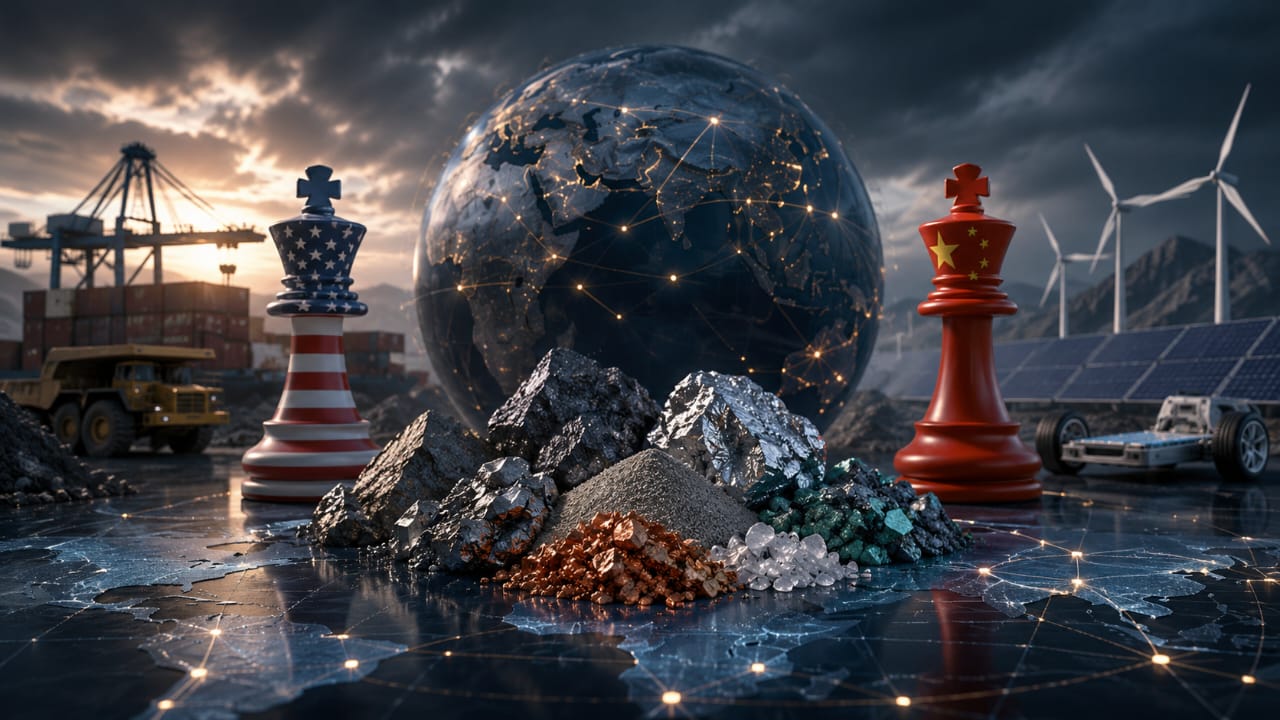
Demand for minerals such as lithium, cobalt, nickel, graphite and rare earth elements has surged alongside investment in electric vehicles, renewable energy infrastructure, battery production and advanced electronics.
The growing importance of these resources is reshaping industrial policy across major economies. Governments in North America, Europe and Asia are introducing initiatives aimed at diversifying supply chains, reducing strategic vulnerabilities and strengthening domestic processing capabilities.
Concerns over supply concentration have intensified as a significant share of global production and refining capacity remains concentrated in a limited number of countries. Policymakers increasingly view access to critical minerals as a matter of economic security rather than simply a commercial consideration.
The issue has become a prominent feature of international trade discussions, with governments exploring new partnerships, investment agreements and financing mechanisms designed to secure long-term access to strategic resources.
For investors, the trend is creating opportunities across mining, processing, logistics and infrastructure sectors. Capital flows into critical mineral projects have increased substantially as companies position themselves to benefit from long-term demand growth associated with the global energy transition.
Developing economies rich in mineral resources may also benefit from increased investment interest, although analysts caution that governance, infrastructure and value-addition policies will be critical to maximising economic gains.
As competition intensifies, critical minerals are expected to remain at the centre of geopolitical, industrial and investment strategies, influencing everything from trade relationships and manufacturing competitiveness to climate objectives and technological innovation.
The emerging race for resource security is increasingly shaping the future architecture of global economic power.