Nigeria does not merely need more capital. It needs institutions capable of converting capital into productive assets, sustainable enterprises and essential services. That is the strategic logic behind NCDF Group’s real-economy investment focus.
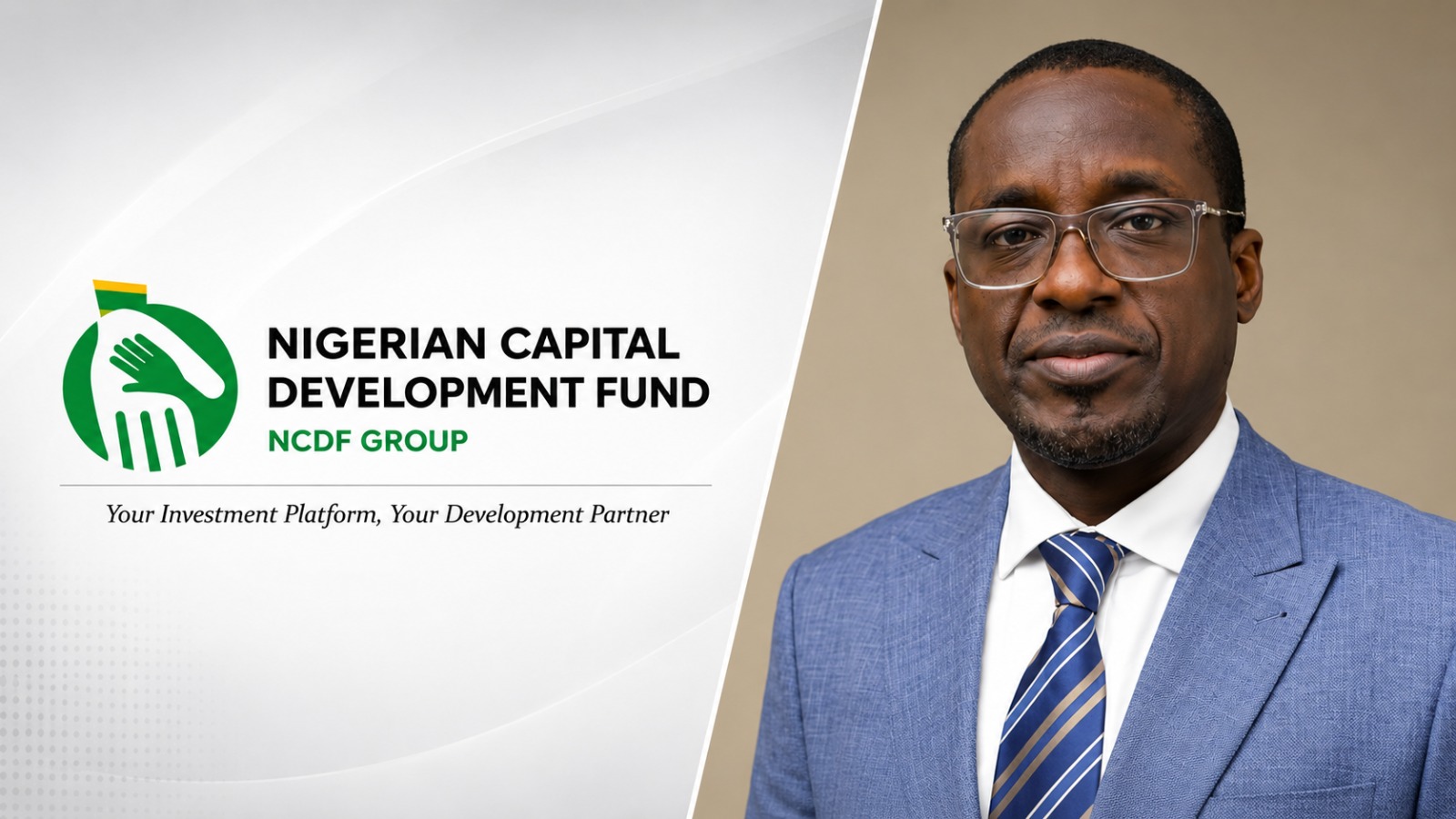
By Hareter Babatunde Oralusi
Executive Chairman, NCDF Group
Every serious investment institution must eventually answer a fundamental question: What should capital build?
Capital can finance transactions, acquire existing assets, generate liquidity and produce financial returns. Yet an economy does not become more productive simply because more money is moving through it. Lasting economic value is created when capital increases the capacity of people and institutions to produce, trade, employ, serve and participate.
At NCDF Group, our answer is therefore clear: capital should help build the productive foundations of prosperity.
It should support the systems through which people obtain housing, healthcare, food, energy-enabled services, financial access, employment and market opportunity. It should strengthen enterprises, expand domestic production, improve trade infrastructure and create assets capable of generating sustainable economic value over time.
This is why NCDF Group focuses on the real economy.
Our belief can be expressed simply:
Capital becomes development only when it creates capacity.
Nigeria’s challenge is not opportunity alone
Nigeria is not a country without opportunity.
It possesses an estimated population of 237.5 million people, an extensive domestic market, a young workforce, substantial agricultural and natural resources, a globally connected diaspora and considerable entrepreneurial energy.
However, opportunity does not automatically become investment.
A country may have significant demand for housing but still lack credible housing-delivery systems. It may have enormous agricultural potential while remaining constrained by fragmented production, limited processing capacity, inadequate storage, poor logistics and weak access to structured markets.
A society may urgently need better healthcare, but healthcare facilities cannot function sustainably without appropriate financing, reliable energy, skilled personnel, technology, maintenance systems and accountable management.
Likewise, millions of people may require financial services, but access alone is insufficient. Sustainable inclusion requires trusted institutions, payment infrastructure, data, consumer protection, appropriate products and viable enterprise pathways.
Nigeria’s deeper economic challenge is therefore one of conversion.
The country has need, but much of that need has not been converted into effective and financeable demand. It has enterprises, but many remain too fragmented or undercapitalised for institutional investment. It has projects, but too few have been sufficiently prepared, governed and structured to attract long-term capital.
The World Bank’s April 2026 Nigeria Development Update reached a similar conclusion from a national economic perspective: macroeconomic stability is necessary, but it is not sufficient. Nigeria requires productive jobs, stronger firms and an enabling environment in which private enterprise can grow.
The missing element is not merely money. It is the institutional machinery that connects economic need, viable enterprise, responsible capital and disciplined execution.
What we mean by the real economy
The real economy is the part of economic life in which goods and services are produced, assets are built and operated, people are employed, businesses generate revenue and communities obtain the systems they need to function.
It includes housing, healthcare, agriculture, manufacturing, infrastructure, logistics, energy, financial access and productive digital systems.
This definition is important because real-economy investment should not be reduced to physical construction.
Technology is part of the real economy when it improves production, payment collection, healthcare delivery, agricultural trade, logistics, housing administration, investor reporting or enterprise productivity. Financial services are part of the real economy when they help households and businesses save, transact, borrow, insure themselves and invest productively.
The distinction is not between physical and digital activity. It is between capital that primarily circulates and capital that expands productive capacity.
Nor is NCDF Group’s real-economy strategy a rejection of finance or capital markets. Finance is indispensable. It determines how projects are structured, how risks are distributed, how long-term assets are funded and how investors eventually realise value.
Our position is therefore not anti-finance.
It is that:
Capital markets are the bridge. The real economy is the destination.
The institutional conversion gap
Traditional financiers generally prefer opportunities that are already investable. They require clear ownership, credible governance, reliable financial information, acceptable risk allocation, appropriate security, competent management and identifiable routes to repayment or exit.
That discipline is reasonable. Investors are responsible for protecting capital.
The difficulty is that many of Nigeria’s most consequential opportunities have not yet reached that standard. They exist between economic relevance and investment readiness.
This is the institutional conversion gap.
A housing project may have land and visible demand but lack proper title documentation, infrastructure agreements, construction controls, buyer-finance arrangements or a credible operating model.
An agricultural project may have access to farmers but lack processing facilities, offtake agreements, traceability systems, quality assurance, working capital and reliable logistics.
A healthcare opportunity may have public support but no sustainable affordability model, energy solution, maintenance plan or operating partner.
A promising small business may have customers but lack financial records, governance systems, collateral, management depth and growth capital.
These opportunities do not become investable simply because their social need is urgent. Need must be translated into a structured commercial proposition.
That conversion requires patient institutional work: project preparation, governance design, commercial analysis, risk allocation, technical partnerships, regulatory engagement, financial modelling, capital structuring and operating coordination.
NCDF Group is positioning itself to perform this conversion function.
From isolated projects to investment platforms
A recurring weakness in development investment is the treatment of every opportunity as a separate project.
Individual projects may succeed, but a collection of unrelated projects rarely creates an institution. Each project may require new documentation, a different management approach, separate operating systems and a fresh investor conversation.
NCDF Group’s strategy is therefore platform-led.
A platform does more than deliver one asset. It creates a repeatable system for originating, structuring, financing, operating and monitoring multiple assets or enterprises within a defined sector.
A housing platform can establish standard approaches to land, design, procurement, construction, buyer finance, property management and diaspora participation.
A healthcare platform can integrate facilities, health financing, energy, technology, equipment, clinical partnerships and operating standards.
An agro-industrial platform can connect producers, processing, storage, logistics, quality assurance, financing, buyers and export channels.
A financial-participation platform can provide payments, savings, insurance, enterprise services and appropriate credit pathways to individuals, cooperatives and small businesses.
Through standardisation, a platform can reduce transaction costs, improve data quality, aggregate smaller opportunities and develop an operating track record that long-term investors can evaluate.
NCDF Group’s published institutional architecture reflects this approach. Its investment platform currently identifies Fatherland Smart Cities, LifeCome Healthcare & Health Energy, Konto Financial Group and AfriGo Digital Economic Zone as its principal sector platforms, supported by specialised investment-management, capital-markets, commercial-coordination and institutional-governance capabilities.
The objective is not to create complexity for its own sake. It is to ensure that capital formation, governance and execution are connected rather than treated as unrelated functions.
Four productive economic systems
NCDF Group’s real-economy thesis can be understood through four productive systems.
Productive places
Housing is not simply a real estate product. It is an economic system.
Well-planned housing activities construction, building-material production, utilities, transport, mortgage finance, property services, local retail and municipal development. It also creates assets through which households may build stability and long-term wealth.
Through Fatherland Smart Cities, the strategic opportunity is to move beyond the sale of individual houses towards a governed housing and urban-development platform capable of coordinating land, infrastructure, construction, finance, technology and long-term community management.
Human resilience
Healthcare is both a social necessity and productive infrastructure.
A healthier population participates more effectively in education, employment and enterprise. Reliable healthcare also protects households from financial shocks that can destroy years of accumulated economic progress.
Through LifeCome Healthcare & Health Energy, the opportunity is to treat healthcare as an integrated system connecting facilities, healthcare finance, operating capability, technology and reliable energy.
The hospital building alone is not the healthcare system. The value comes from whether the facility can operate, remain affordable, maintain quality and serve patients consistently.
Productive trade and food systems
Agriculture cannot create its full economic value when it ends at primary production.
Farmers require access to inputs, finance, information, aggregation, storage, processing, logistics and dependable buyers. Investors require traceability, quality assurance, documented transactions, reliable volumes and clear revenue mechanisms.
Nigeria’s food-system challenge illustrates the urgency of this work. FAO projected that approximately 34.7 million people could face crisis-level or worse acute food insecurity by the middle of 2026. At the same time, FAO continues to recognise the country’s substantial potential to improve food security and unlock inclusive economic growth.
Through AfriGo Digital Economic Zone and related agro-industrial pathways, NCDF Group’s proposition is not limited to farmer aggregation. It is to help connect production to processing, logistics, structured trade and market access.
That is not merely an agricultural agenda. It is an industrialisation agenda.
Inclusive economic participation
Millions of households and enterprises cannot participate fully in the economy without dependable financial infrastructure.
Financial inclusion should not be understood solely as opening more accounts. Meaningful inclusion enables people to transact securely, save, access insurance, establish financial identities, obtain suitable financing and build businesses.
Through Konto Financial Group and related participation platforms, the objective is to connect financial access with productive economic activity.
Finance becomes more developmentally relevant when it helps households acquire assets, supports merchants, strengthens cooperatives, enables small businesses and improves the movement of capital throughout the wider real economy.
Why commercial discipline matters
Investing in the real economy does not mean that every socially desirable project is automatically commercially viable.
This distinction is essential.
Some projects can generate fully commercial, risk-adjusted returns. Others may require long-tenor debt, guarantees, first-loss protection, viability-gap funding, public-sector support or blended-finance structures. Certain interventions may be valuable but better suited to philanthropy or public expenditure than investment capital.
Responsible investment requires these differences to be acknowledged.
NCDF Group must therefore operate where three conditions can be brought together:
substantial economic need, credible commercial viability and measurable development additionality.
Need without a viable revenue model may produce permanent financial dependence. Profitability without development relevance may create returns but little additional productive value. Impact claims without operating evidence may generate publicity but not accountability.
The strongest investments are those in which commercial performance and development outcomes reinforce each other.
A commercially sustainable healthcare platform can continue serving patients, employ more people and attract further investment. A viable housing platform can replicate across additional locations. A profitable processing facility can purchase more agricultural output and connect more producers to markets.
Financial sustainability protects the continuity of the development mission.
Real-economy investing is difficult by design
There should be no romanticism about real-economy investment.
Physical and productive assets can be illiquid. Projects may face land, construction, regulatory, currency, inflation, counterparty, technology and operating risks. Development periods may be long, and cash flows may take time to stabilise.
An essential sector is not necessarily a safe investment. High demand does not guarantee affordability. A strong concept does not guarantee execution. A government relationship does not remove regulatory risk. A social objective does not compensate for weak governance.
For NCDF Group, the real-economy thesis must therefore be supported by rigorous underwriting.
Every investment should answer fundamental questions: Who pays? How are revenues collected? What capital structure matches the asset’s development and operating period? Which party carries each material risk? Who operates and maintains the asset? What governance rights protect investors and beneficiaries? How will performance be measured? What is the route to dividends, refinancing or responsible exit?
The ambition must always remain subordinate to the discipline.
The standard NCDF Group must set for itself
A real-economy thesis is credible only when it is supported by evidence.
NCDF Group must therefore be prepared to distinguish clearly between concepts, early-stage pipelines, signed commitments, projects under development, capital deployed, operating assets and completed outcomes.
These categories are not interchangeable.
Institutional credibility will also require disciplined capital allocation. Housing, healthcare, financial services, agriculture, energy, technology and infrastructure are all substantial sectors. NCDF should not attempt to pursue every available opportunity simply because it is socially relevant.
The Group must maintain a clear hierarchy between core platforms, supporting capabilities, incubation opportunities and activities that should be undertaken through partnerships rather than direct ownership.
Regulatory descriptions must equally remain precise. Where an activity requires authorisation, the identity of the regulated entity, the scope of its licence and the limitations of that authorisation should be stated unambiguously.
Finally, impact must be treated as a measurable investment outcome rather than a communications label.
Homes delivered, patients served, productive capacity installed, enterprises financed, jobs supported, agricultural volumes processed, household costs reduced, and investor returns achieved should be reported using defined methodologies and, where appropriate, independent assurance.
The next stage of NCDF Group’s institutional development should therefore be defined not only by the scale of its ambition, but by the quality of its proof.
A wider economic alignment
NCDF Group’s thesis is increasingly aligned with the direction of Nigeria’s broader development agenda.
The World Bank Group’s new 2026–2032 Country Partnership Framework for Nigeria places private-sector-led job creation at the centre of long-term prosperity. Its stated priorities include mobilising private capital for infrastructure and agribusiness, improving competitiveness, unlocking a more productive and healthier population and strengthening resilience.
This reinforces an important point.
Nigeria’s development requirements cannot be financed through public expenditure alone. But private capital will not participate at a sufficient scale merely because the need is large.
Capital will move when opportunities are structured, risks are understood, governance is credible, economics are transparent and execution capability is demonstrable.
This is the institutional space NCDF Group intends to occupy.
From capital to capacity
NCDF Group does not invest in the real economy because physical assets are morally superior to financial assets.
It invests in the real economy because Nigeria’s most consequential unmet needs and many of its most durable growth opportunities converge there.
Housing, healthcare, food systems, productive infrastructure, financial participation and enterprise development are not peripheral to economic growth. They are the systems through which growth becomes visible in people’s lives.
Our responsibility is therefore greater than mobilising capital.
It is to ensure that capital is converted into governed assets, functioning enterprises, sustainable services, responsible cash flows and measurable public value.
That is what we mean by productive capital.
That is why NCDF Group invests in the real economy.
And that is the institutional proposition behind Capital Into Capacity.
Editorial disclosure
Hareter Babatunde Oralusi is the Executive Chairman of NCDF Group. This article presents the author’s strategic perspective on the Group’s real-economy investment thesis. It does not constitute investment advice, an offer, a recommendation or a solicitation. Any investment opportunity would remain subject to applicable regulation, independent due diligence, approvals and definitive documentation.