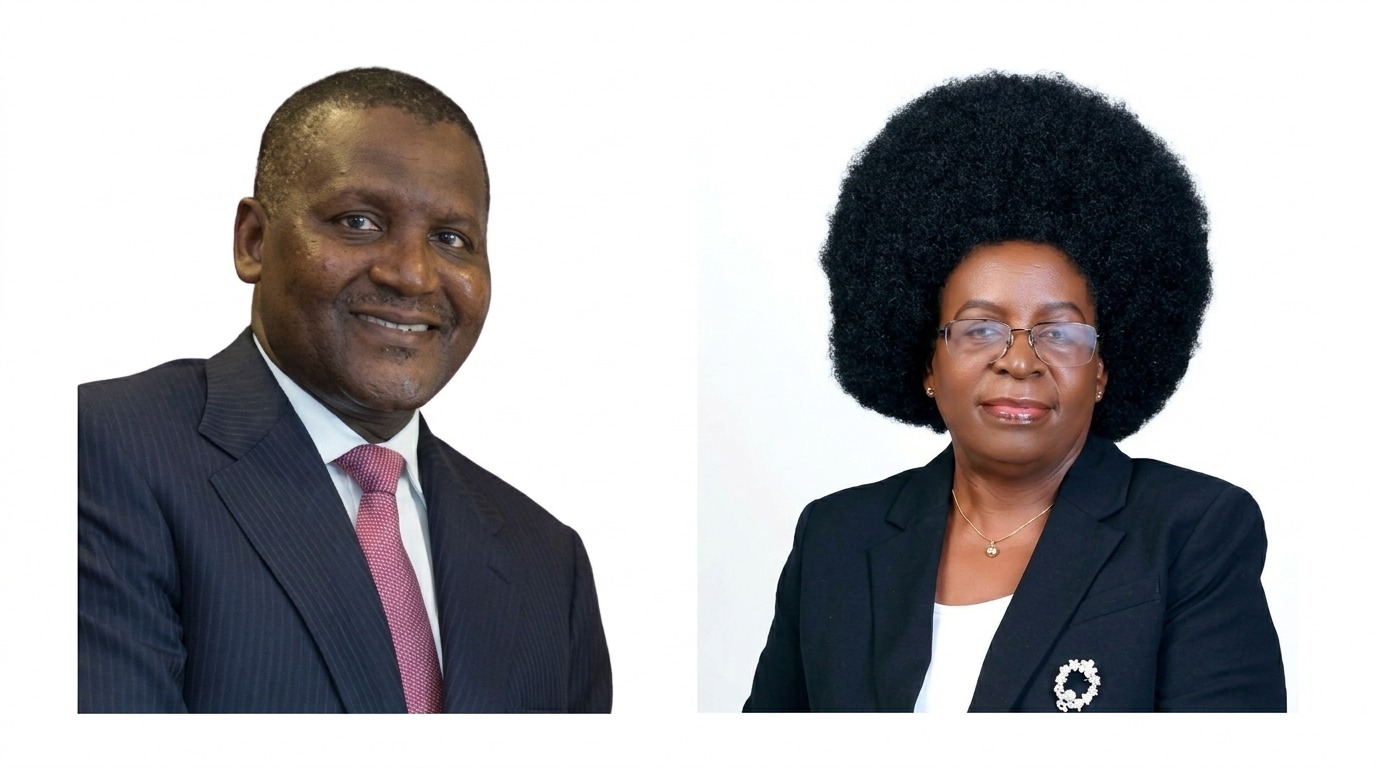
The invitation was extended during a meeting in Lagos between Dangote and a Ugandan government delegation led by Energy and Mineral Development Minister Monica Musenero Masanza and Minister of State for Finance, Planning and Economic Development for Privatisation and Investment Amina Mukalazi.
The delegation highlighted Uganda's natural resources and industrial development priorities, encouraging Dangote to bring his experience in large-scale manufacturing and infrastructure development to the East African country.
A central component of the discussions is Uganda's proposed 60,000-barrel-per-day oil refinery in the Hoima area. Musenero urged Dangote to take a leading role in advancing the project, citing his experience in developing and operating major industrial facilities.
The proposed refinery is expected to strengthen Uganda's domestic petroleum-processing capacity and reduce reliance on imported refined products. It could also support the development of related industries by creating demand for infrastructure, logistics, engineering and technical services.
Uganda's government also presented opportunities in fertiliser blending, phosphate processing and salt manufacturing. These sectors form part of a broader industrialisation strategy intended to use locally available resources to develop products for domestic consumption and regional markets.
The proposal reflects increasing efforts across Africa to expand domestic processing rather than relying primarily on the export of unprocessed natural resources.
Dangote's industrial operations provide a relevant reference point for Uganda's ambitions. His group's investments in cement, fertiliser and petroleum refining have established a significant manufacturing presence across several African markets.
The Ugandan delegation also suggested that a potential refinery investment could complement Dangote Group's proposed refinery development in Lamu, Kenya. Such projects could serve different regional markets, with Uganda's proposed facility supporting inland demand and the Kenyan development targeting coastal and maritime distribution networks.
However, no final investment agreement or commitment from Dangote was established in the reported discussions. The proposed projects will require further negotiations, financing arrangements, regulatory approvals and assessments of commercial viability.
For Uganda, attracting experienced industrial investors could accelerate infrastructure development, strengthen domestic supply chains and create employment opportunities. The challenge will be to establish financing structures and investment conditions capable of supporting projects with substantial capital requirements.
The outcome of the discussions could therefore have wider implications for East Africa's energy security and its efforts to expand regional manufacturing capacity.