
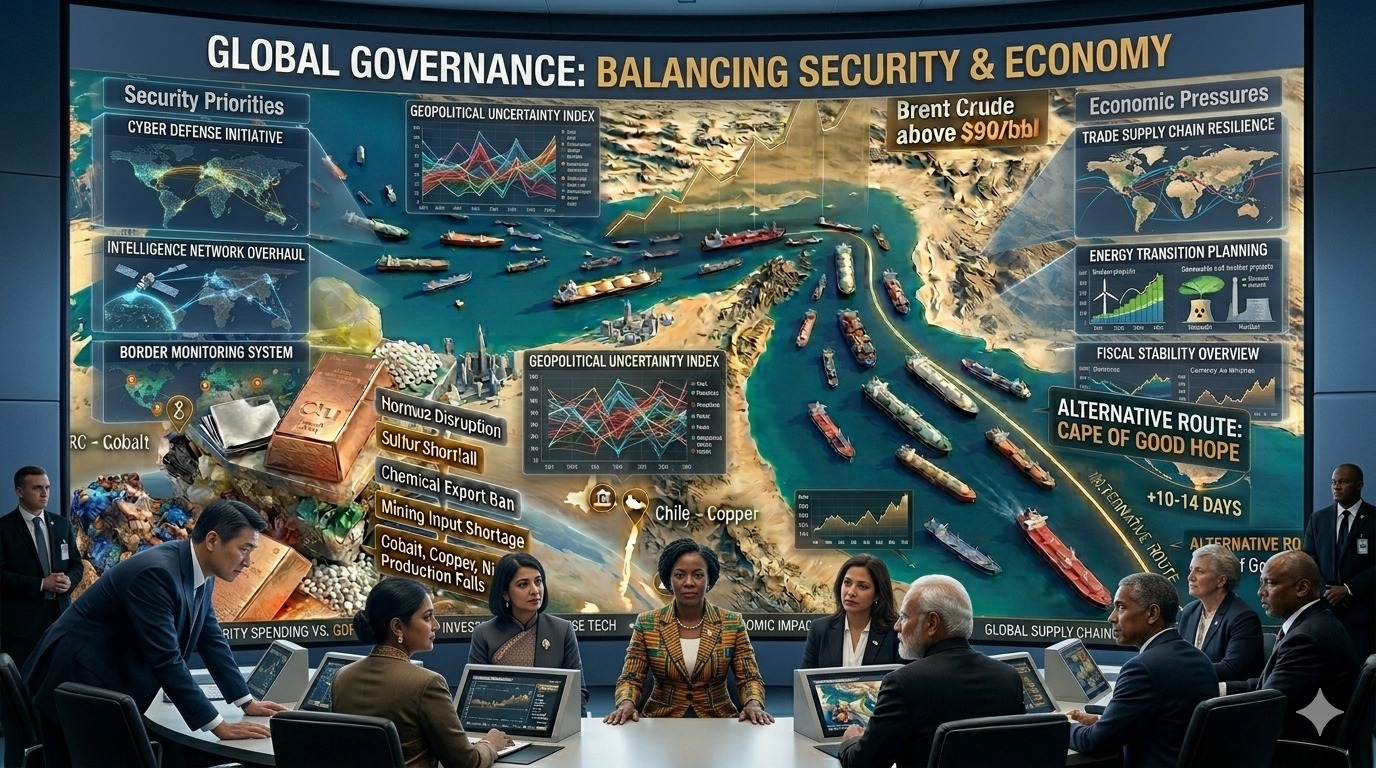
The convergence of security and economic policymaking reflects a broader shift in how governments assess risks in an increasingly interconnected world. Policymakers are now weighing issues such as supply-chain resilience, energy security, industrial competitiveness and strategic autonomy alongside traditional defence concerns.
Recent geopolitical developments have accelerated efforts to strengthen domestic production capabilities in sectors considered critical to national interests, including semiconductors, energy infrastructure, telecommunications and advanced manufacturing.
However, these initiatives often carry significant fiscal implications. Governments face pressure to maintain economic growth, manage inflation and support public services while funding large-scale strategic investments.
Business leaders are closely monitoring policy developments as changes in trade rules, industrial incentives and regulatory frameworks increasingly influence investment decisions. Several multinational firms have adjusted expansion plans in response to shifting geopolitical priorities and government support programmes.
Political analysts note that economic resilience has become a central element of national security discussions. Policymakers are increasingly focused on reducing dependence on vulnerable supply chains and ensuring access to strategic resources.
For voters, the challenge often manifests through concerns about employment, living costs and economic opportunity. Governments therefore face growing pressure to demonstrate that security-focused policies also deliver tangible economic benefits.
As global competition intensifies, the relationship between politics, economics and national security is expected to remain a defining theme in policymaking, influencing everything from trade relations to technological development and long-term economic strategy.